Voyages & Discovery
Historiarum Indicarum libri XVI. Selectarum, item, ex India epistolarum libri IV
MAFFEI, Giovanni Pietro · Antwerp · Martinus Nutius · 1605
Maffei's classic Jesuit history of the Portuguese in Asia, with the selected letters from India and the additional letters on Japan, in contemporary vellum.
FM-0288
€ 2.950
All prices include VAT. Import duties outside the EU are not included.
Free insured shipping. The price shown is the price you pay.
Key Properties
Edition: Antwerp, Martinus Nutius, 1605, with the Japan letters omitted from the Venice edition
Format: Two parts in one volume, octavo, 165 x 110 mm
Pagination: [72], 478, [2 blank]; 401, [7] (according to the seller's description)
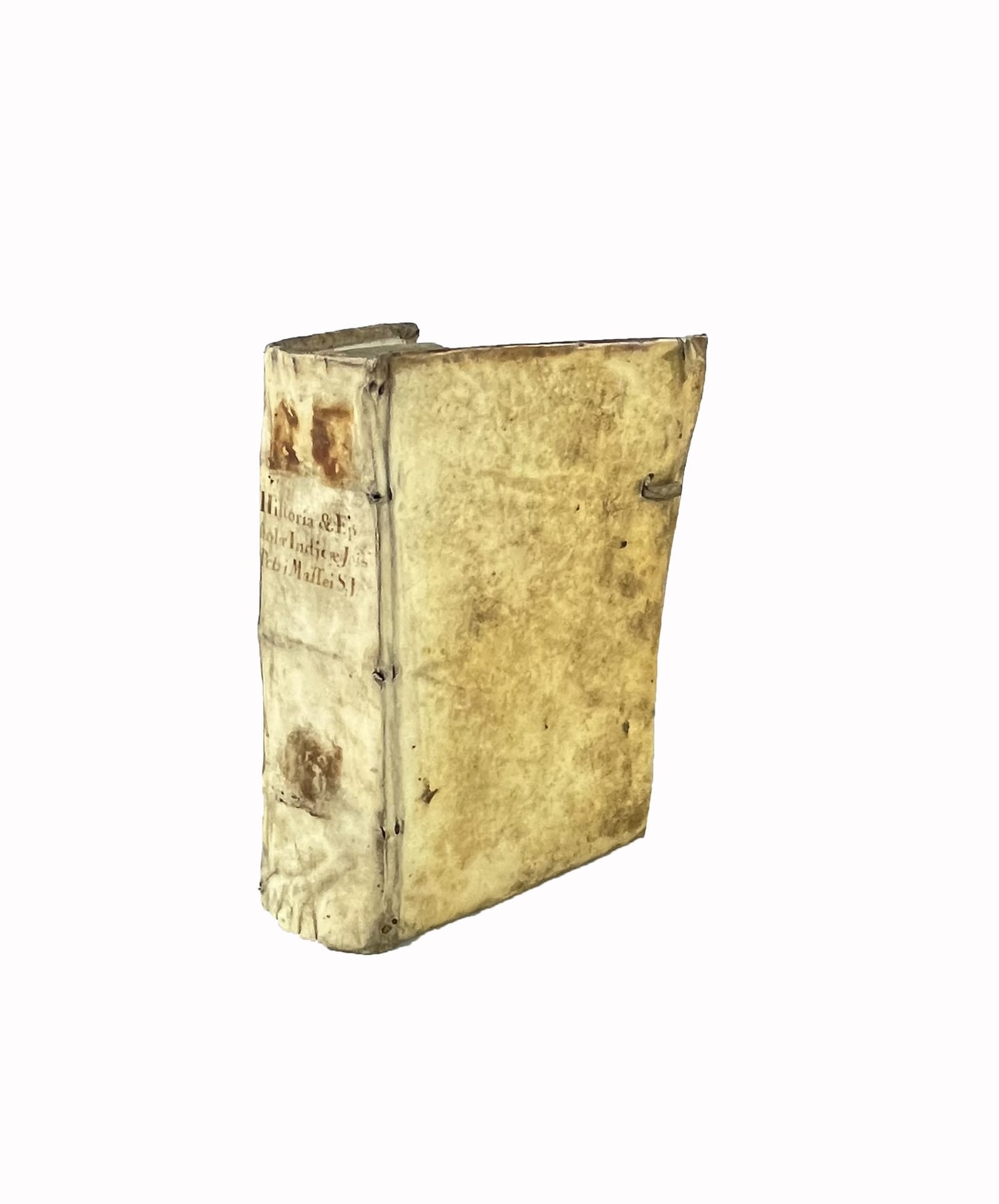
Binding: Contemporary full vellum with yapp edges
Provenance: Early owners' inscriptions on the front pastedown and title
Collation & Technical Description
Two parts in one volume. Pp. [72], 478, [2 blank]; 401, [7] (according to the seller's description).
Condition
Contemporary full vellum with yapp edges. Printer's device on the title, woodcut initials, roman type. Manuscript inscriptions of early owners on the front pastedown and the title-page.
References & Bibliography
Sabin 43773.
Borba de Moraes, Bibliographia Brasiliana, p. 509.
Cordier, Bibliotheca Japonica, col. 64.
Alt-Japan-Katalog 916.
De Backer & Sommervogel, Bibliothèque de la Compagnie de Jésus, V, col. 298.
Lach, Asia in the Making of Europe, I, pp. 325-326.
Description
Giovanni Pietro Maffei (1533-1603), a Jesuit from Bergamo, was called to Lisbon to write the history of the Portuguese in the East from the archives and the reports of the missionaries. His Historiarum Indicarum libri XVI, first published in Florence in 1588, became the standard account in Latin of Portuguese expansion in Asia and of the Jesuit missions there. Much of it deals with the conquests and the Jesuit stations in India, the East Indies and the lands around the Arabian Sea up to about 1557. The first five books follow the model of João de Barros closely, while Book VI, on China, and Book XII, chiefly on Japan, draw heavily on the descriptions of these countries by Alessandro Valignano, the Visitor of the Jesuit missions in Asia.
The second part, with its own half-title, gives Maffei's Latin translation of a selection of Jesuit letters from the Indies, including Emanuel da Costa's history of the Society's work in the East. This Antwerp edition of 1605 also contains two groups of letters that had been left out of the Venice edition, on Japan and on India. The Japan section is often lacking, and Sabin calls this the best of the many Latin editions; Borba de Moraes describes it as the most complete.
Historical Significance
A cornerstone of the early European literature on Asia and on the Jesuit mission to Japan, in the edition regarded as the best and most complete of the Latin editions.
Provenance
Early owners' manuscript inscriptions on the front pastedown and title-page.