Voyages & Discovery
Verhael van de eerste Schipvaert by 't Noorden om
Gerrit de Veer · Amsterdam · Adriaan Roest (Hartgens edition) · 1650
Rare Hartgens edition (Roest, 1650) of the Barentszoon north-east passage voyages, with an early account of Henry Hudson's 1609 voyage and the Hudson River
FM-0074
€ 6.000
Key Properties
Format: Small quarto
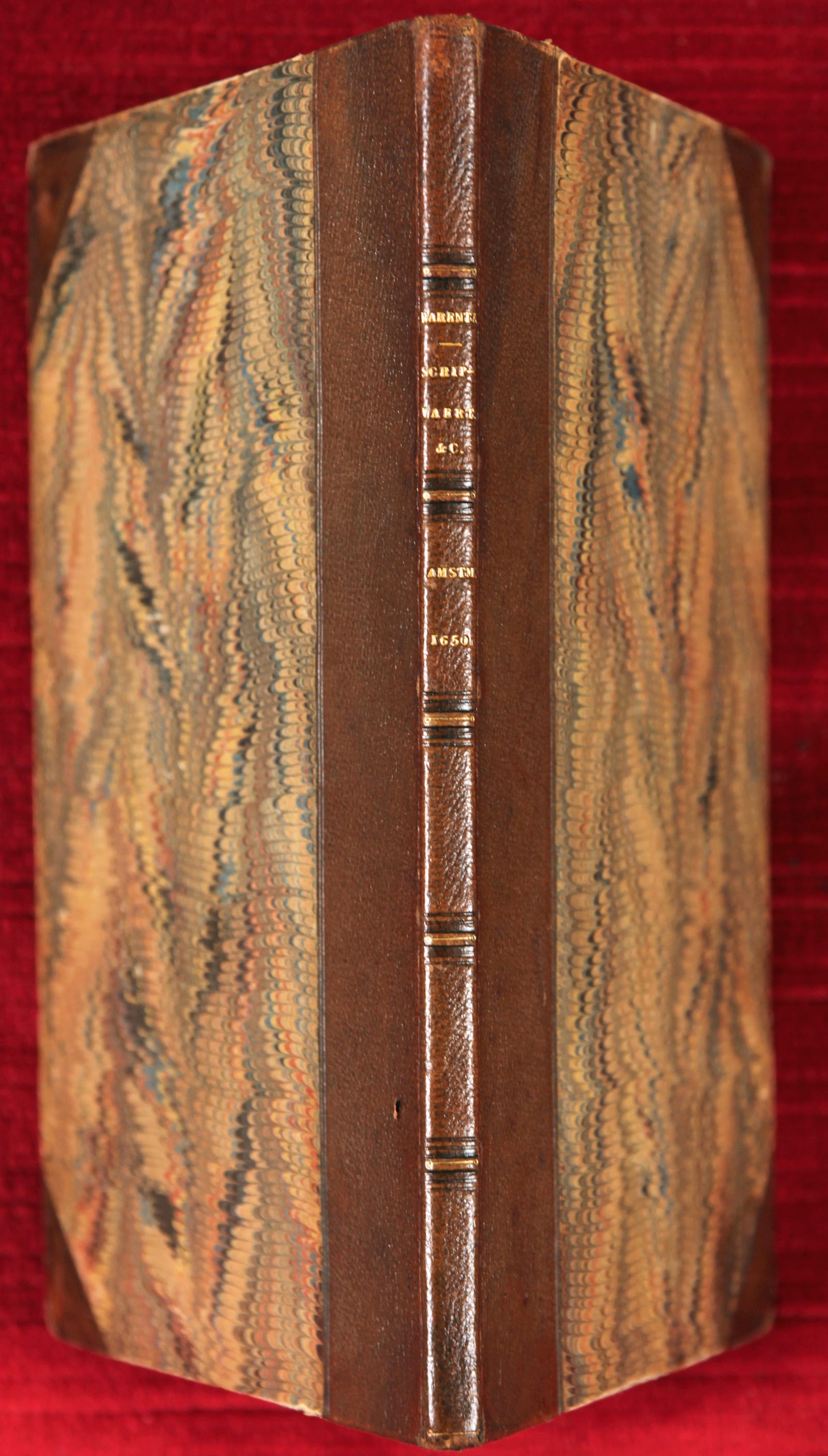
Binding: Nineteenth-century half brown morocco, title gilt on the spine
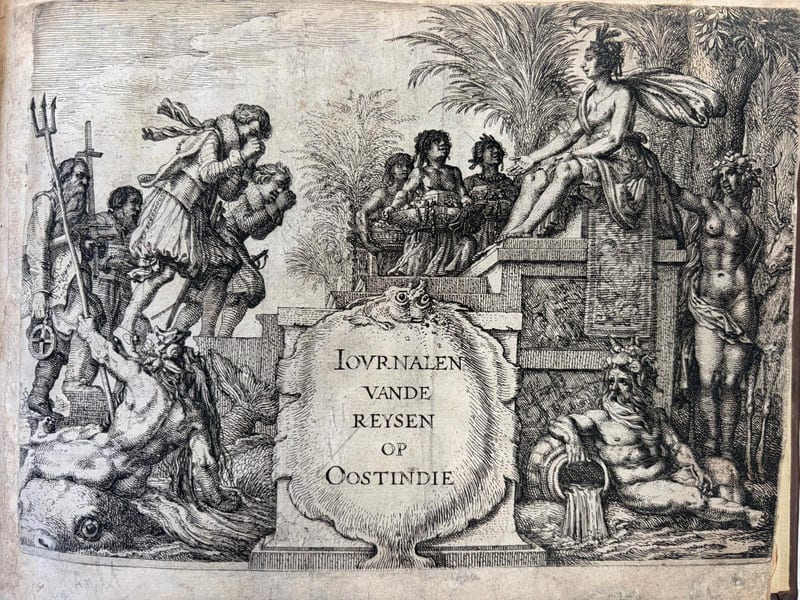
Illustration: Woodcut on the title-page and 6 copper-engraved text plates
Collation: 65 pages (last blank)
Language: Dutch
Reference: Tiele, Memoire, 102
Collation & Technical Description
Small quarto. 65 pages (the last blank). The title-page (pages 1 to 2) with a woodcut, and 6 original copper-engraved text plates. Cut down and rebound in the nineteenth century in half brown morocco, the title gilt on the spine.
Condition
A rare edition, rebound in the nineteenth century in half brown morocco. A hole in the title-page has been restored, probably at the time of rebinding, and the volume is cut a little short, just touching a few of the headings.
References & Bibliography
Tiele, Memoire, 102. Muller, Detectio Freti Hudsoni (Amsterdam, 1878). L'Honore Naber, Reizen van Willem Barents naar het Noorden (The Hague, Nijhoff, 1917), 2 vols. Asher, Henry Hudson the Navigator (Hakluyt Society, 1860). Beke, The Three Voyages by the North-East towards Cathay and China (Hakluyt Society, 1853).
Description
The Verhael van de eerste schipvaert by 't Noorden om, the account of the three Dutch voyages in search of the north-east passage to Cathay under Willem Barentszoon and Jacob van Heemskerck (1594, 1595 and 1596). This is the Hartgens text, here in the Amsterdam edition printed by Adriaan Roest in 1650, the second Hartgens imprint after the first of 1648. All the Hartgens editions of the early Dutch voyages to the north and east are rare.
The well-known Barentszoon narrative, first published in 1598, is followed by a group of related northern texts. A summary of the fourth Dutch voyage north, which was Henry Hudson's third voyage of 1609, includes his exploration of the east coast of North America around forty degrees north, prompted by letters and maps sent to him by Captain John Smith, and of the river that would come to bear his name. There follow Isaac Massa's descriptions of Siberia (Samojeda and Tingoessa) and of the roads and rivers leading east from Muscovy, and Johannes Pontanus's plea for the discovery of a north-east or north-west passage, drawing on the history up to 1586.
Two of the texts in this small volume carry great weight. Henry Hudson had been hired by the Dutch East India Company to find the north-east passage above Russia; when ice blocked him, he defied his instructions, turned west on rumours passed to him by John Smith of Jamestown, and in September 1609 sailed the Halve Maen into what is now New York Harbour, exploring some 150 miles up the river that still bears his name. That voyage gave the Dutch Republic its claim to the region that became New Netherland, with its capital New Amsterdam, the future New York. The account by Isaac Massa is scarcely less important: his maps of Siberia, drawn from first-hand information, were the earliest to reach western Europe and were copied for decades by the great atlas makers, from Mercator and Hondius to Janssonius and Blaeu.