Voyages & Discovery
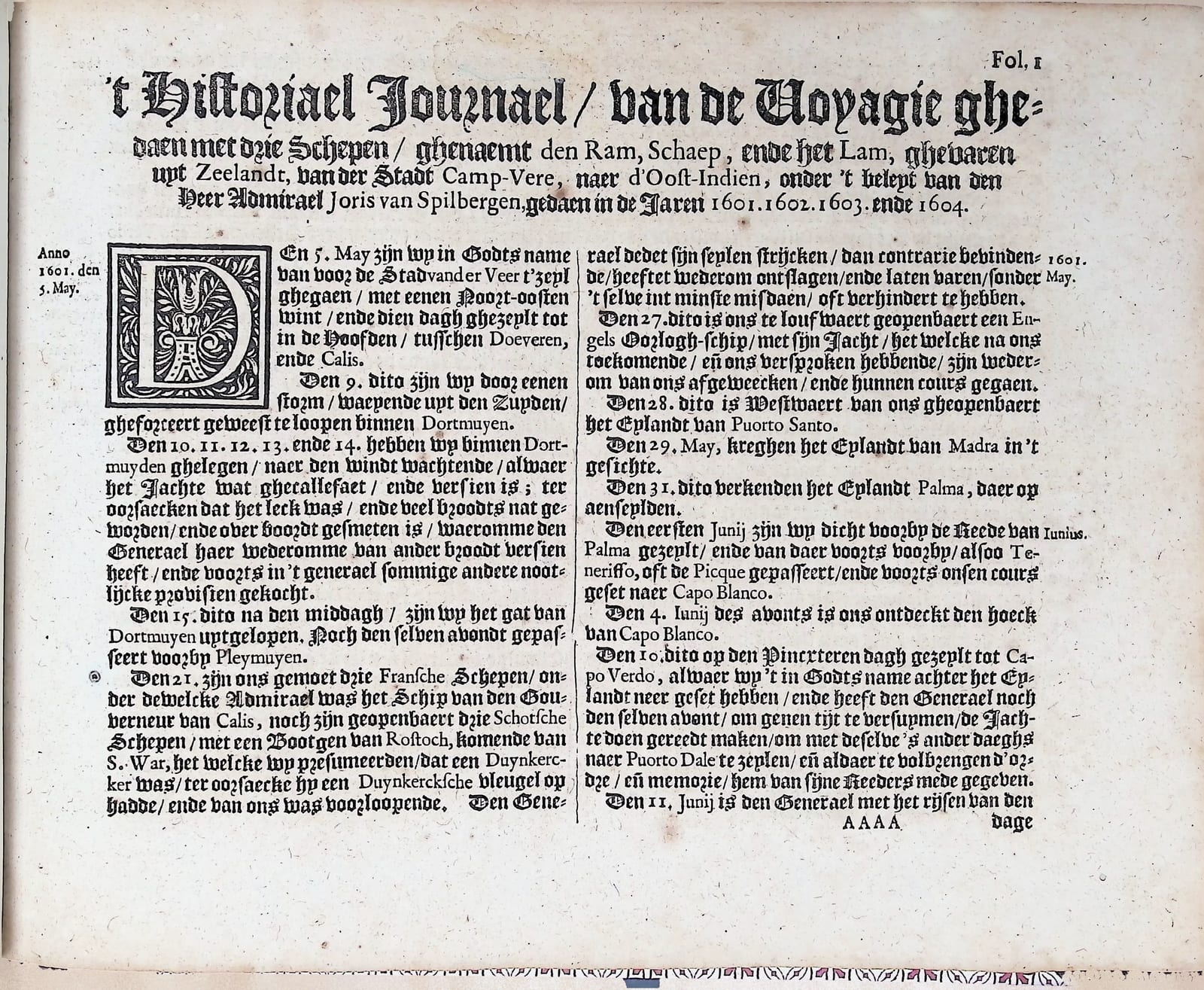
Historisch Journael, Spilbergen's Voyagie naar Oost-Indien (1601–1604)
Joris van Spilbergen (with Wolfhart Harmanszoon & Cornelis van Veen) · Amsterdam · Commelin & Janssonius · 1646
Commelin/Janssonius collected edition (Amsterdam, 1646) of Spilbergen's voyage to the East Indies, the first Dutch contact with Ceylon, bound with the voyages of Wolfhart Harmanszoon and Cornelis van Veen. Oblong quarto, modern quarter morocco. NB: 9 of 10 plates, lacking only the folding plan of Candy (plate 9); the folding map of Ceylon (plate 6) is present.
FM-0057
€ 3.500
Key Properties
Oblong quarto. Modern quarter morocco. 64 pp, the last two leaves original blanks. Three voyages bound together: Spilbergen's Historisch Journael (3 ships from Zeeland to the East Indies, 1601–1604), Wolfhart Harmanszoon (1601–1603), and a short account of Cornelis van Veen. Several plates printed in reverse (pl. 1 Dale, 2, 5 Vintana, 6 Kandy, 9 Ceylon). Engravings probably after Cornelis Janszoon Vennip, engraved by Floris Balthasar.
Condition
Modern quarter morocco, oblong quarto; 64 pp, the last two leaves original blanks. PLATES: 9 of the 10 plates present, LACKING only the folding plan of Candy/Kandy (plate 9). The folding map of Ceylon (plate 6) IS present. Please review the images carefully and contact us with any questions.
References & Bibliography
Spilbergen: Tiele, Mémoire, p. 158; Linschoten-Vereeniging XXXVIII (1933), p. 103. Harmanszoon: Gaastra, Geschiedenis van de VOC (Walburg Pers, 2002).
Description
This voyage was undertaken before the creation of the Dutch East India Company in 1602 and set out from Zeeland. It was financed by Baltasar de Moucheron, who had also financed the first voyage to Atjeh (1598), on which Cornelis de Houtman died and his brother Frederik de Houtman was held prisoner for 18 months. The Spilbergen voyage established the first contact between the Dutch and Ceylon (Sri Lanka), in competition with the Portuguese. A first letter from the voyage was published in Delft in 1601, the first publication of the journal in the same city (undated, but 1604), with two further editions in 1605. The journal holds special interest for South Africa: it was Spilbergen who renamed the southernmost bay on Africa's west coast "Tafel-Bay" (Table Bay), moving its original name, Aguada de Saldanha, northward. He also named the islands in front of Table Bay, including Elisabeth (now Robben Island) and Cornelia, all shown on the map included as plate 2. That plate, like plates 1 (Dale), 5 (Vintana), 6 (Kandy) and 9 (Ceylon), is printed in reverse. The style of engraving differs markedly from the other Commelin illustrations and is probably based on drawings by Cornelis Janszoon Vennip (Linschoten-Vereeniging XXXVIII), engraved by Floris Balthasar, the original editor. Bound after the Spilbergen journal is the voyage of Wolfhart Harmanszoon, financed by the Oude Compagnie (Old Company); unillustrated but historically important, it obtained a 1602 privilege for nutmeg and mace from Pulau Ai, one of the Banda islands, for its investors (Gaastra, 2002:45). A short account of the voyage of Cornelis van Veen completes the volume.
Historical Significance
One of the earliest Dutch voyages to the East Indies, predating the VOC (1602); it established the first Dutch contact with Ceylon and is significant for South African toponymy (Spilbergen's naming of Table Bay, Robben Island and Cornelia). The accompanying Harmanszoon voyage secured a 1602 nutmeg-and-mace privilege on Pulau Ai (Banda).
Related works
Voyages & Discovery · FM-0041
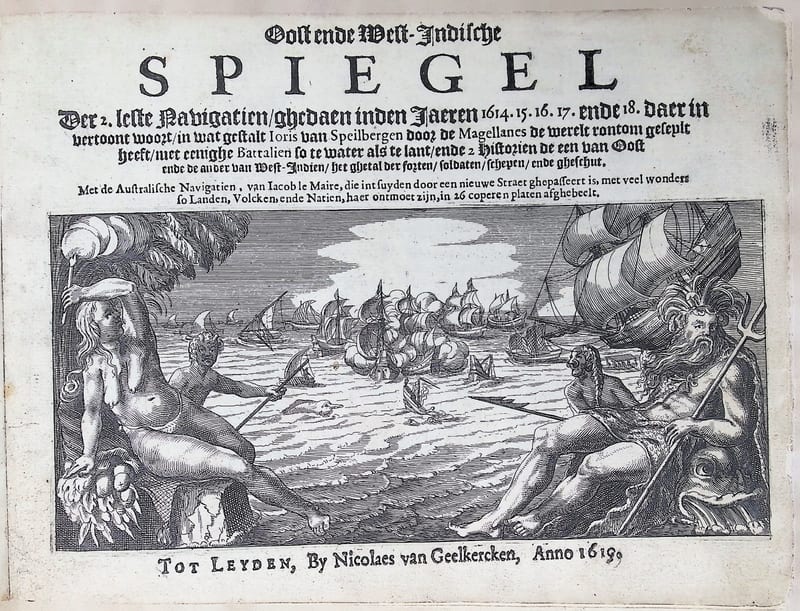
Oost ende West-Indische Spiegel
Joris van Spilbergen; with Jacob le Maire and Willem Schouten, Australische Navigatien · Leiden · 1619
Price on request
Voyages & Discovery · FM-0105
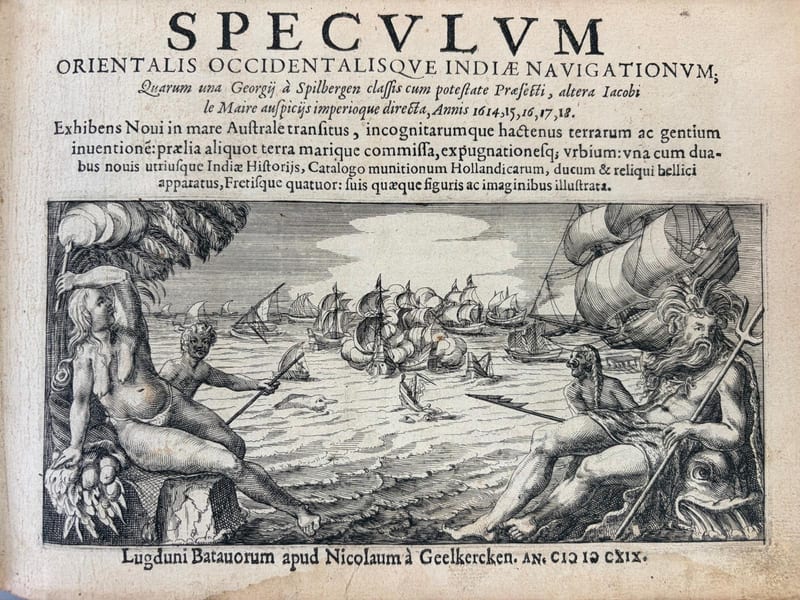
Speculum orientalis occidentalisque Indiae navigationum
Joris van Spilbergen; with Jacob le Maire, Navigationes Australes · Leiden · 1619
€ 15.000
Voyages & Discovery · FM-0043
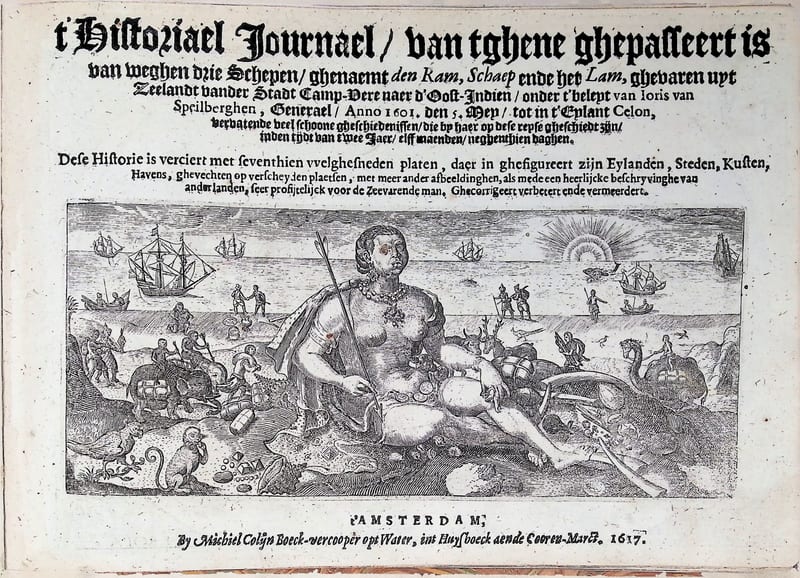
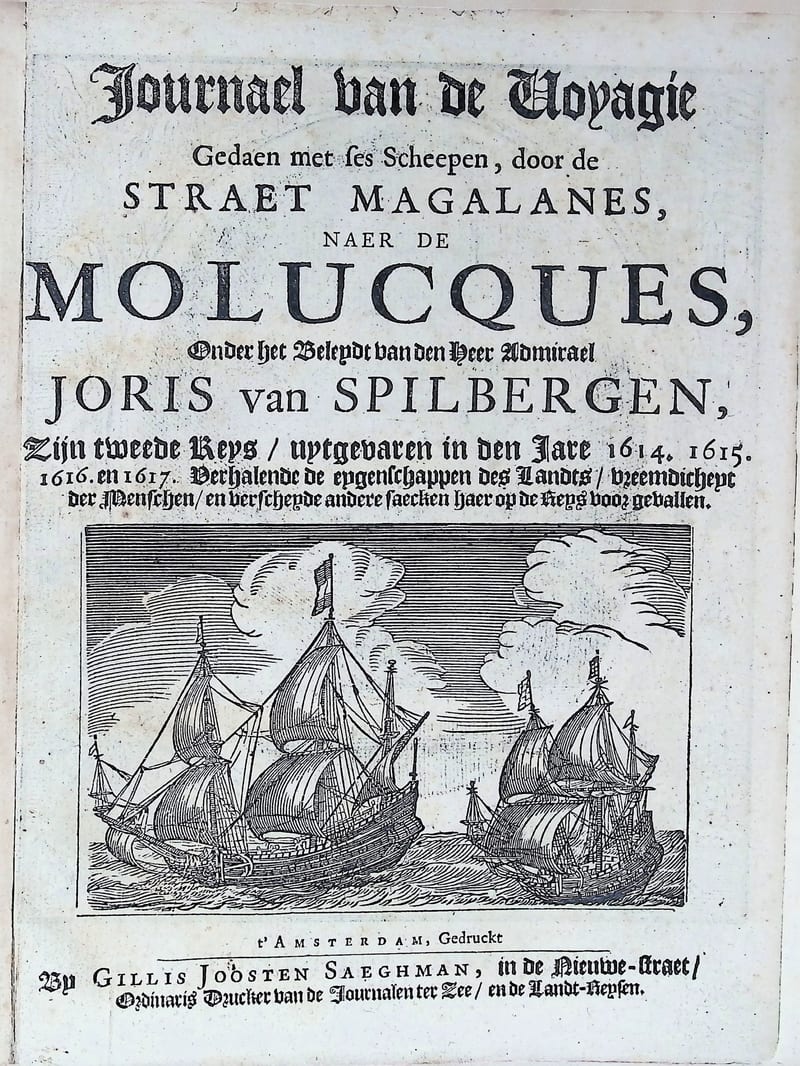
’t Historiael Journael van Joris van Spilbergen naer Oost-Indien (Ceylon)
Joris van Spilbergen · Amsterdam · 1617
€ 9.000
Voyages & Discovery · FM-0035
Oost ende West Indische Spieghel
Joris van Spilbergen (text by Jan Cornelisz May) · Amsterdam · circa 1663
€ 7.000
All 8 works: Joris van Spilbergen → · Joris van Spilbergen · Isaac Commelin, Begin ende Voortgangh · The Dutch East India Company (VOC)