Voyages & Discovery
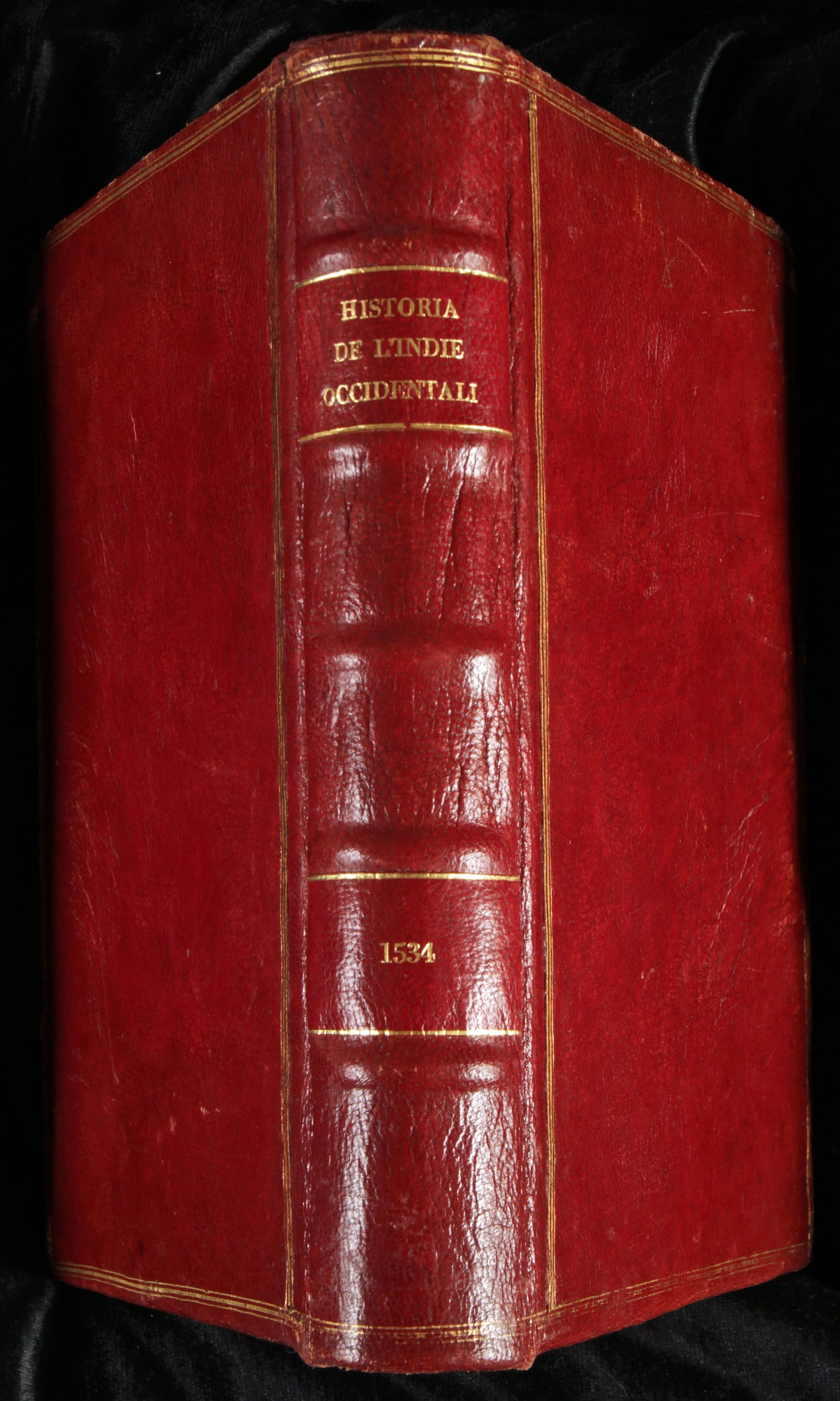
Libro primo della Historia de l'Indie Occidentali (with) Libro secondo delle Indie Occidentali (with) Libro ultimo del Summario delle Indie Occidentali
Peter Martyr d'Anghiera and Gonzalo Fernandez de Oviedo, with an anonymous letter on the conquest of Peru, the volume probably assembled by Giovanni Battista Ramusio · Venice · 1534
Three foundational texts of Americana in a single volume: Peter Martyr, Oviedo, and one of the earliest printed reports of the conquest of Peru
FM-0076
€ 22.000
Key Properties
Format: Small quarto, 20 x 15 cm
Binding: Rebound in nineteenth-century red morocco, raised bands, title labels in gilt
Illustration: Four woodcuts after the Toledo 1526 Oviedo; woodcut map of Hispaniola in facsimile
Contents: Three works bound as one, the collection probably formed by Giovanni Battista Ramusio
Language: Italian
Collation & Technical Description
Martyr: 1 unnumbered leaf (title); leaves 2–79; 1 original blank; folded map.
Oviedo: 1 unnumbered leaf (title); 2 leaves (prologue); leaves 4–64 (text); 2 leaves (register, with the text explaining the 1534 Ramusio map).
Anonymous: 1 unnumbered leaf (title); 15 unnumbered leaves (the text of the early letter describing the conquest of Peru).
The Oviedo woodcuts are found at folio 21 verso (hamaca), folio 48 verso (arbol gigante), folio 49 recto (prender fuego) and folio 52 verso (hoja del platano).
Condition
Rebound in the nineteenth century in red morocco, raised bands and gilt title labels, sound and clean. The woodcut map of Hispaniola, Isola Spagnuola, bound between the first and the second book, is a facsimile; the map is wanting in most surviving copies. The large world map called for in the colophon is not present, as in all but two recorded copies.
References & Bibliography
Harrisse 190; Church 69. For the world map called for in the colophon, Burden 10.
Description
This is a Sammelband of three works on the New World, printed at Venice in 1534, and one of the most substantial gatherings of early Americana that an Italian press produced in the first half of the sixteenth century. The collector who assembled it was in all probability Giovanni Battista Ramusio, whose great compilation of voyages would follow sixteen years later.
The first book is a summary of the Decades of Peter Martyr d'Anghiera, the humanist at the Spanish court who interviewed returning pilots and captains and whose letters became the first sustained European account of the discoveries. His eight Decades had appeared complete for the first time only in 1530. Bound between the first and the second book is the woodcut map of Hispaniola, Isola Spagnuola, here in facsimile; the map is wanting in most copies that survive.
The second book is a faithful reprinting of the first edition of Oviedo's Sumario, published at Toledo in 1526 and now practically unobtainable. Gonzalo Fernandez de Oviedo had served in the Indies and wrote from what he had seen. The plain woodcuts of the Toledo edition were copied here, enlarged, and supplied with further detail of plants and of people, which makes them among the earliest printed images of the American world: the hammock, the giant tree, the making of fire, the leaf of the banana.
The final leaf of the Oviedo text carries a curious colophon. It gives the date of printing, December 1534 at Venice, claims a copyright of twenty years, and explains the origin of a map of all the West Indies that was to be added to the book. Of that famous map, tutto questo mondo nuovo, only two copies are known to survive: one in the New York Public Library, and a contemporary coloured example in the John Carter Brown Library.
The third and last book is one of the earliest printed reports of the conquest of Peru by Francisco Pizarro. Its author travelled to Spain with Hernando Pizarro, the conqueror's brother, or was Hernando Pizarro himself. Their ship reached Seville in January 1534 carrying presents of gold for the Emperor, and the news it brought ran through the printing houses of Europe within months.
Historical Significance
The Peru letter in this volume belongs to the small group of imprints through which Europe first learned that the Inca empire had fallen. The sequence, as far as it can be reconstructed, runs as follows: the oldest surviving printed version appears to be the German New Zeitung aus Hispanien und Italien of February 1534; the second a Spanish imprint by Bartolome Perez at Seville in April of the same year; the third was added to the second edition of Bordone's Isolario in June 1534; and the present text is the fourth, of October 1534. In between, the same Bartolome Perez printed the report of Pizarro's secretary Francisco de Xeres under the title Verdadera relacion de la conquista del Peru, in July 1534.
Taken together the three works show how quickly Venice became the clearing house for Spanish news of the Indies, and how a single reader with the right connections could hold, in one binding, the humanist account of the discoveries, the first naturalist's report from the Caribbean, and the freshest dispatch from Peru.
Related works
Voyages & Discovery · FM-0028
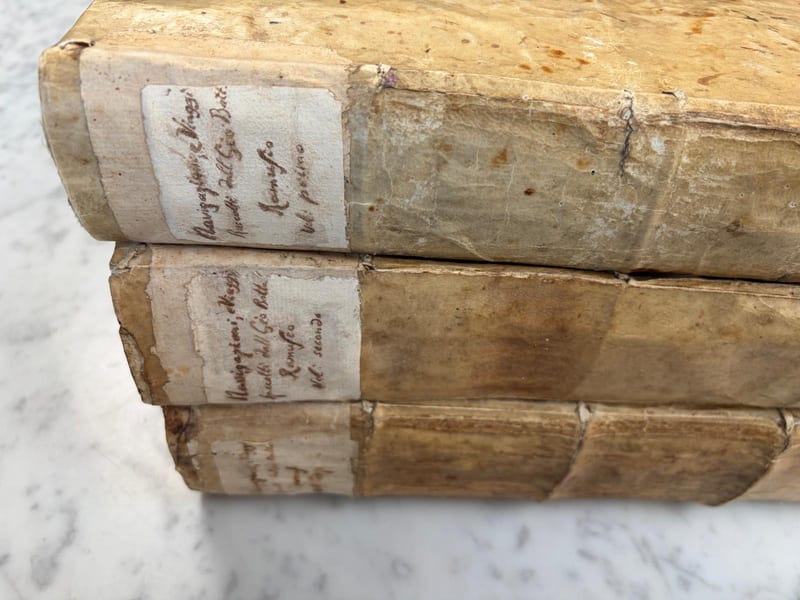
Delle navigationi et viaggi
Giovanni Battista Ramusio · Venice · 1563; 1583; 1565
Price on request
Voyages & Discovery · FM-0024
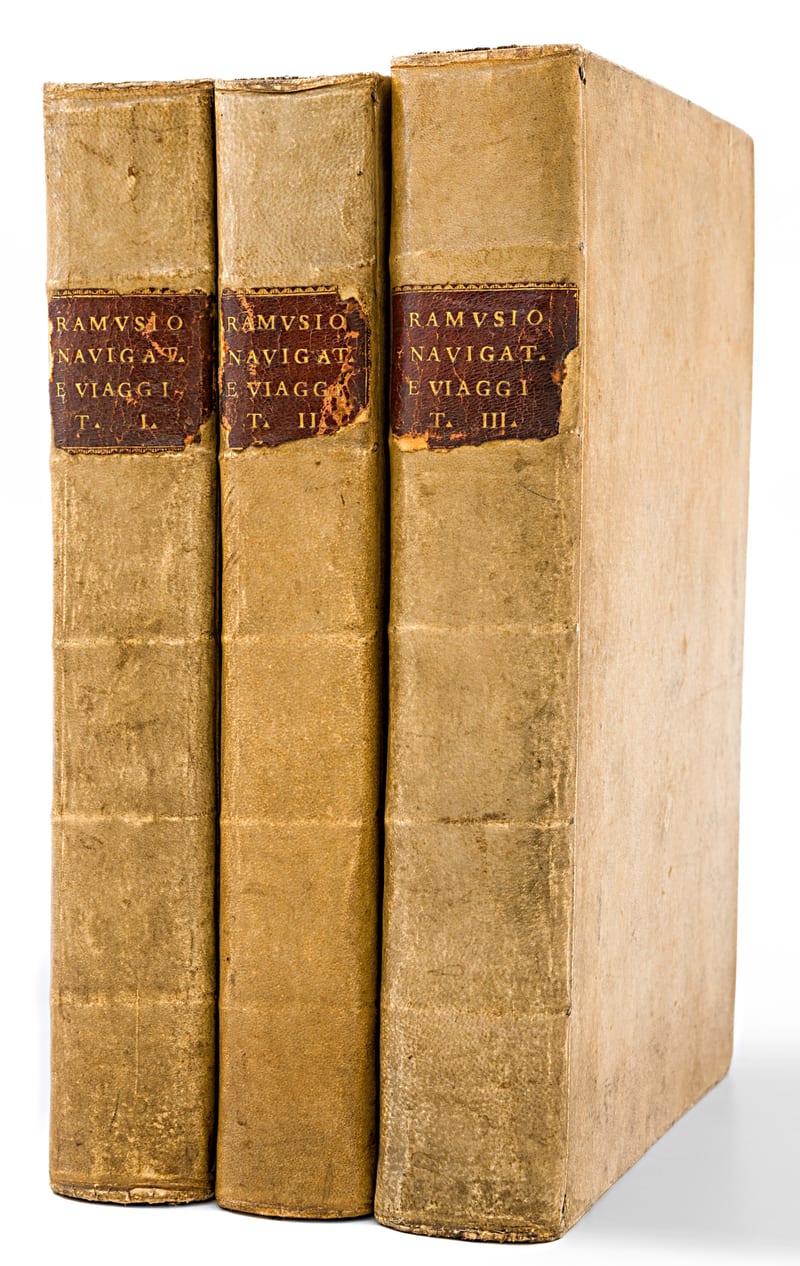
DELLE NAVIGATIONI (1613, 1583, 1606)
Giovanni Battista Ramusio (1485-1557) · Vol. 1: 1613; Vol. 2: 1583; Vol. 3: 1606
Price on request
Voyages & Discovery · FM-0027
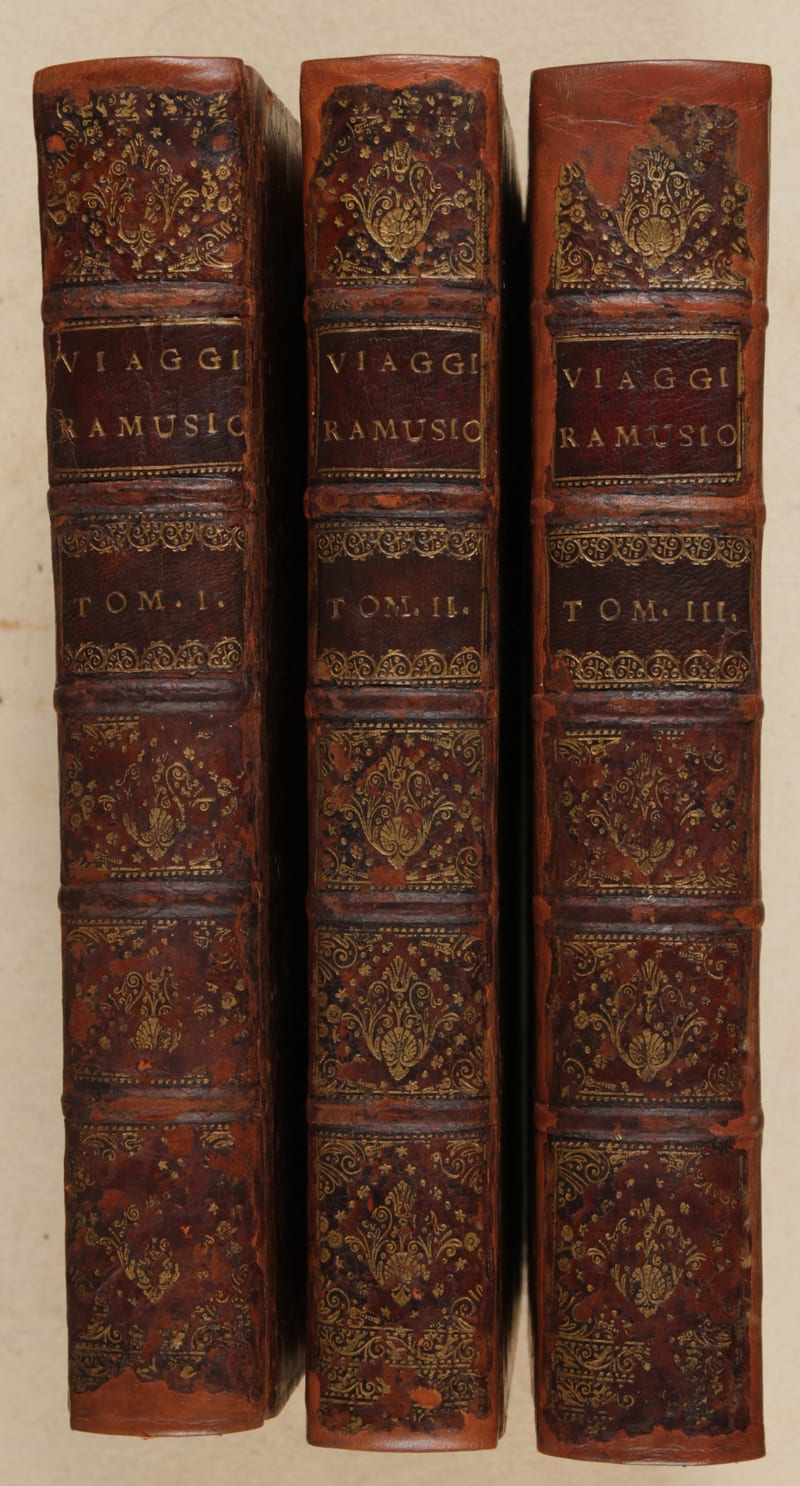
Delle navigationi et viaggi
Giovanni Battista Ramusio · Venice · 1613; 1583; 1606
Price on request
All 4 works: Giovanni Battista Ramusio →