Books
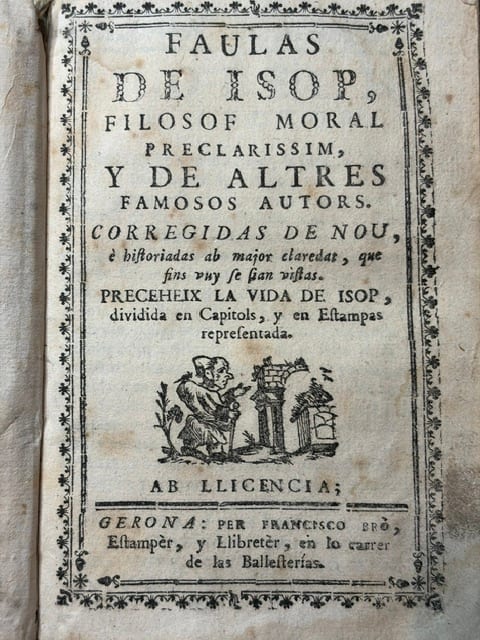
Faulas de Isop, filosof moral preclarissim, y de altres famosos autors. Corregidas de nou, e historiadas ab major claredat, que fins vuy se sian vistas. Preceheix la vida de Isop, dividida en capitols, y en estampas representada
Aesop (Isop) · Girona (Gerona) · Francisco Bro, estamper y llibreter, carrer de las Ballesterias · n.d., c. 1790
The Catalan Aesop: life and fables of Aesop with 199 woodcuts printed from old Girona blocks, one of only two books known from the press of Francisco Bro. Contemporary vellum. Very rare: OCLC records only two complete copies in America.
FM-0200
€ 12.000
Key Properties
Octavo, 15 x 10 cm. Contemporary limp vellum over carton, title in ink on the spine. 4 unnumbered leaves, 344 pp., 4 unnumbered leaves (register). Woodcut vignette on the title page and 199 woodcuts in the text (c. 58 x 79 mm), printed from old blocks of the Girona presses. Text in Catalan. Printed by Francisco (Francesc) Bro i Sala, one of only two books recorded from his press. Palau 81976. In a modern cloth slipcase.
Collation & Technical Description
4 nn leaves (title, Prolech al lector, table), 344 pp., 4 nn leaves (register). Illustrated title page; 199 woodcut illustrations of c. 58 x 79 mm, one to each chapter of the Life and to each fable, with a caption line beneath each cut in the Life. Life of Aesop pp. 1-71, followed by the fables of Aesop and of other authors (Avianus, Alfonsus, the extravagantes and others) in eight books, each fable ending with its moral (declaracio y sentencia).
Condition
Binding somewhat loosened; some stains and unobtrusive dampstaining throughout, heavier towards the lower margin of the first leaves; a few contemporary numerals in the margins. Text and woodcuts in healthy, strong impression. A completely unsophisticated copy in its first binding, as issued for daily use, which is exactly how these popular books were read to pieces.
References & Bibliography
Palau 81976 (2nd ed.); in the first edition of the Manual del librero (vol. III, 1925, s.v. Esopo) Palau describes this very edition from his own copy: "Nosotros poseemos la de Gerona per Francisco Bro, Estampér, y Llibretér, en lo carrer de las Ballesterias, 8.º 4 h. 344 p. 4 hojas", listed among the undated eighteenth-century reprints that follow the Altés edition of 1743, adding that these popular Aesops "a veces han conseguido precios elevados en el extranjero" and that even of the later printings very few copies have survived unblemished. Mirambell i Belloc, La familia Bro, d'impressors gironins, Annals de l'Institut d'Estudis Gironins 27 (1984), pp. 249-311 (Francesc Bro i Sala, admitted as printer 1779, active from 1780; the Isop and a Kempis the only books known from his press). Almirall, Les versions catalanes de la Vita Aesopi (Institut d'Estudis Catalans). Amades, Xilografies gironines, 2 vols, Girona 1947-48, and the separate extract Les faules d'Isop (1947), on the woodblocks of the Girona presses. Biblioteca de Catalunya copy dated [1790]. OCLC: two complete copies in America.
Description
The Catalan Aesop, the most popular illustrated book of the Catalan-speaking lands for three centuries, here in a late eighteenth-century Girona edition of the utmost rarity. The volume opens with the Life of Aesop in twenty-eight chapters, each with its woodcut and a caption beneath, followed by the fables of Aesop and of other famous authors in eight books, every fable closing with its moral. The old prologue is retained: the book was translated from Latin into Catalan by the physician Remisi on the commission of Cardinal Antoni (Cerdà) of Sant Crisogono, and dedicated to Don Enrique de Aragón, Infant of Aragon and Sicily, Duke of Segorbe, Count of Empúries and Viceroy of Catalonia, which takes the text straight back to the fifteenth-century Catalan version and, behind it, to the Latin Aesop of Heinrich Steinhöwel.
The Catalan Isop first appeared in print in Barcelona in 1550 (Amorós), and was reprinted in 1576, 1612, 1642, 1682 and 1683, always in Barcelona, before the Girona presses of the Oliva and Bro families took it up in the eighteenth century. All these editions were cheap books for the widest public, read until they fell apart, and each survives in only one or two copies. Our edition was printed by Francisco Bro in the carrer de las Ballesterias, the last printer of a family that had dominated Girona printing since the War of the Spanish Succession. Francesc Bro i Sala passed his printer's examination in 1779, inherited the shop from his father Miquel in 1780 and made his will in 1811; only two books are known from his press, this Isop and a Kempis. Palau owned a copy himself and describes it in the Manual del librero, placing it among the undated eighteenth-century reprints that followed the Barcelona edition of 1743; the copy in the Biblioteca de Catalunya is dated [1790].
The 199 woodcuts are the great attraction of the book. They belong to the stock of blocks that passed from one Girona printer to the next, from the Bro and Oliva shops to Suñer and finally to the Tipografia Carreras, where in 1945 the whole collection of over two thousand old blocks was rediscovered; it is now in the Museu d'Art de Girona and was published by Joan Amades in his Xilografies gironines. The cuts in our book are of very different dates: worn blocks with broken borders and re-cut replacements stand side by side, and several go back in design to the earliest illustrated Aesops of the fifteenth century, from which the Catalan tradition had copied them again and again, the same images being cut anew whenever a block broke. The Life is illustrated in the old narrative manner (Aesop admitting the guests, Aesop set free, Aesop before King Croesus), the fables with the familiar animal scenes.
A rare survival of Catalan popular printing in its original state, uncut and in its first vellum wrapper.
Historical Significance
The Isop is one of the founding texts of Catalan printed literature: the first illustrated book of fables in the language, in print without interruption from 1550 to the nineteenth century, and the vehicle by which the medieval Aesop reached generations of Catalan readers and schoolchildren. Its woodcuts document the survival of the fifteenth-century Aesop iconography into the age of Goya, and the Girona blocks from which they were printed are today a museum collection in their own right. Because these books were made to be used, complete early copies in original bindings have become extremely rare: OCLC records only two complete copies in America.
Provenance
Frederik Muller Rare Books, Amsterdam (stock of the firm, taken over with the business). Old dealer description preserved.
Related works
Science · FM-0073
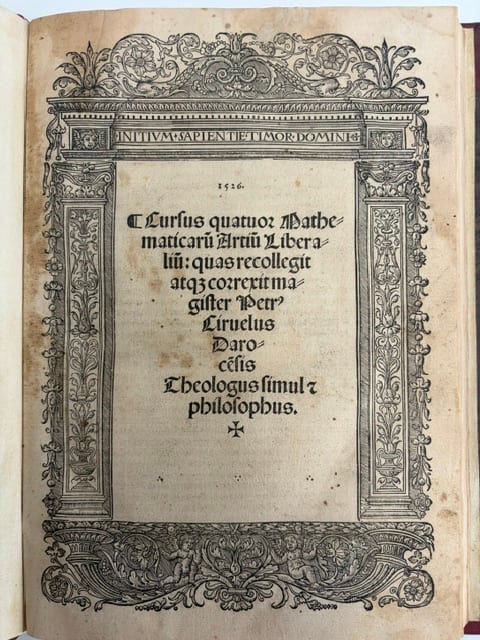
Cursus quattuor mathematicarum artium liberalium
CIRUELO, Pedro · Alcalá de Henares · 1516-1528
Price on request
Science · FM-0089
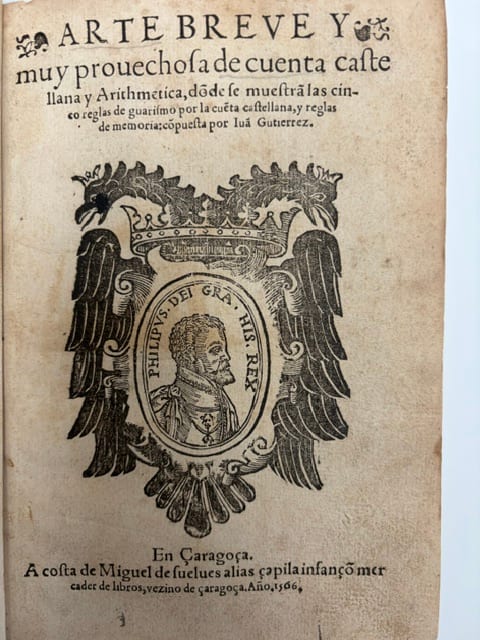
Arte breve y muy provechosa de cuenta castellana y Arithmetica
Gutierrez de Gualda, Juan · Zaragoza · 1566
€ 18.000
Voyages & Discovery · FM-0092
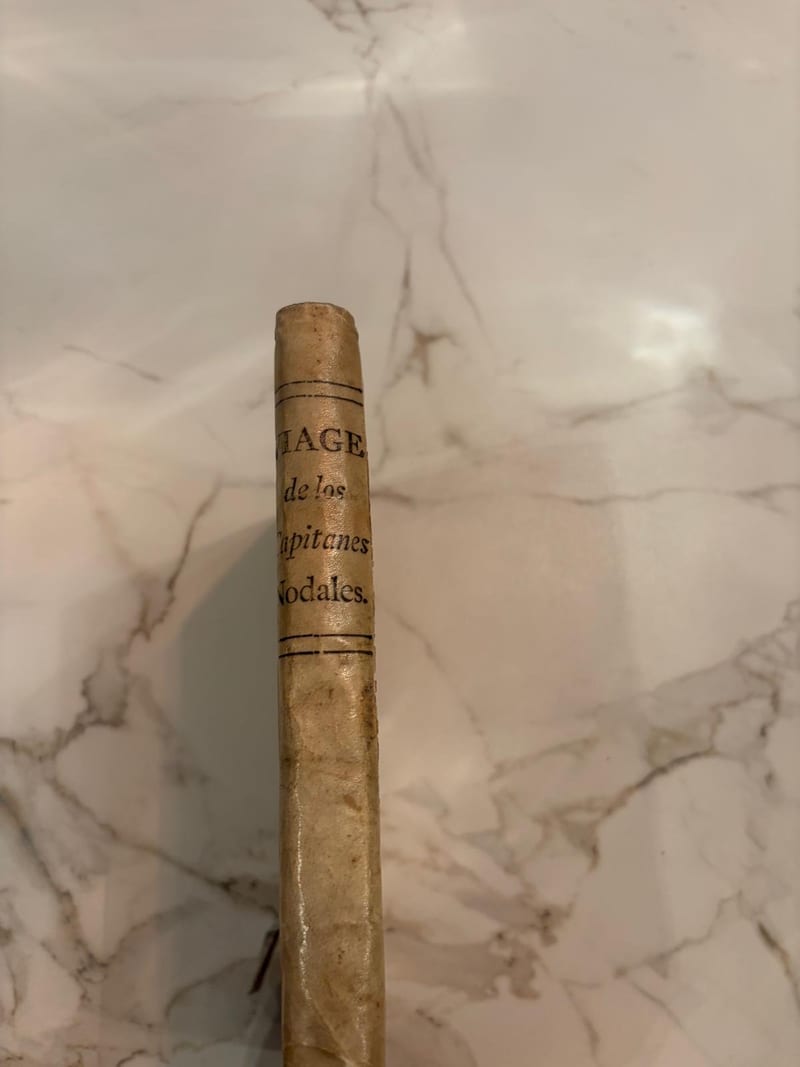
Relacion del viaje que por orden de su Magestad y acuerdo del Real Consejo de Indias hizieron los capitanes Bartolome Garcia de Nodal y Gonzalo de Nodal
Bartolomé García de Nodal and Gonzalo de Nodal · Cádiz · 1769
€ 8.400
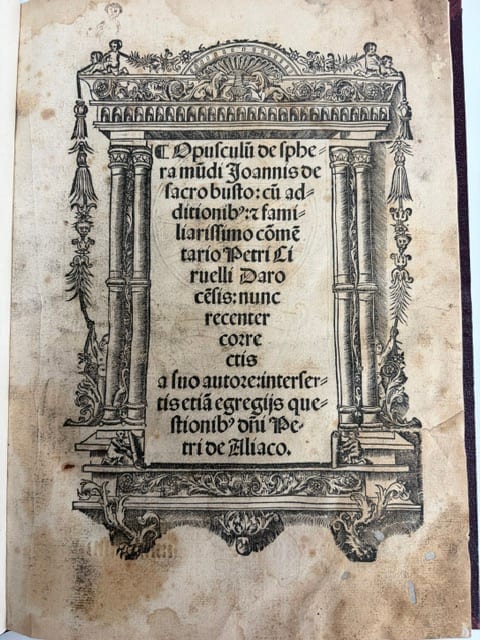
Science · FM-0112
Opusculum de sphera mundi, cum commentario Petri Ciruelli
SACROBOSCO, Johannes de; CIRUELO, Pedro · Alcala de Henares · 1526
€ 5.000
All 7 works: Spanish books of science and the Indies →