Antique Maps
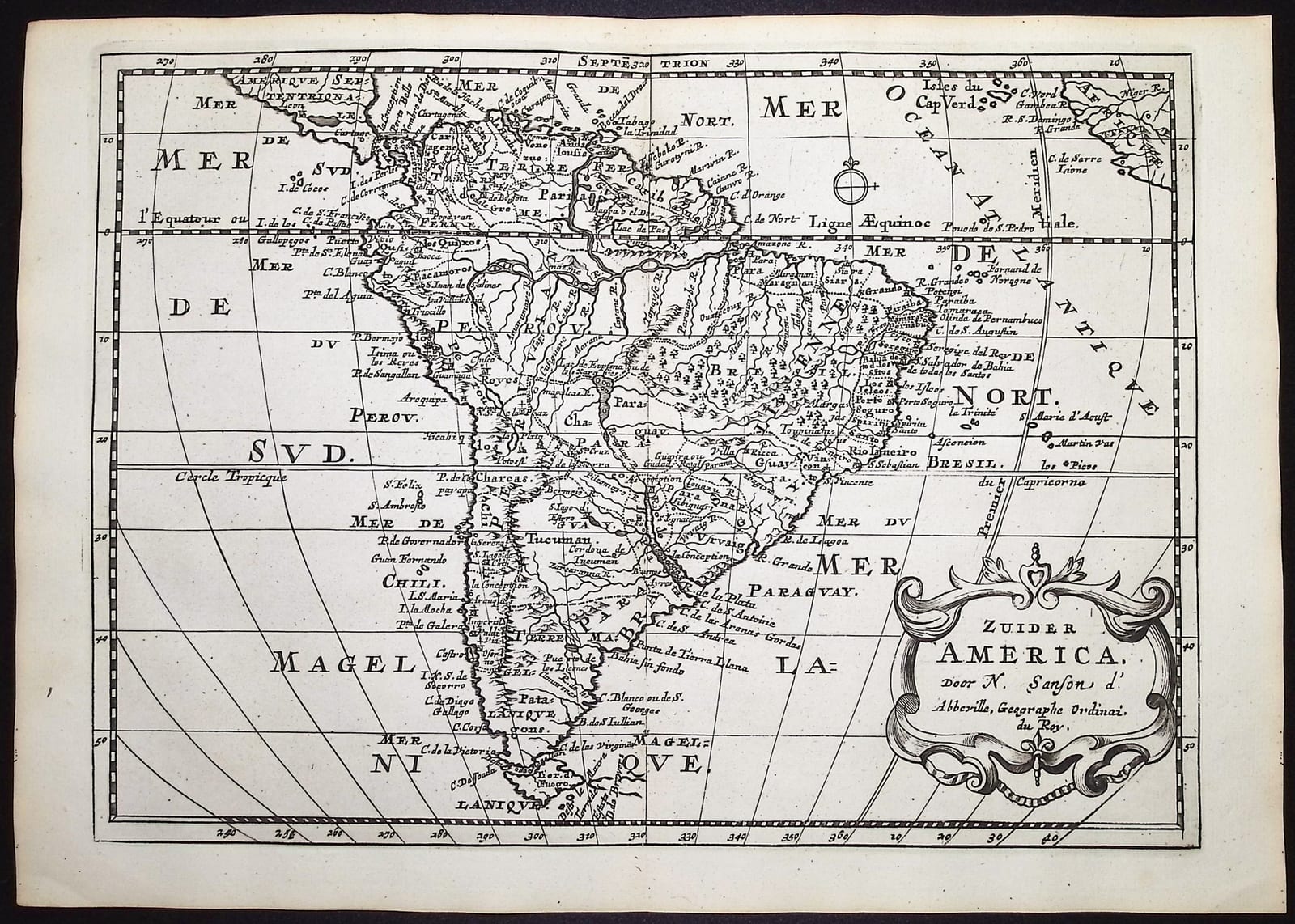
Zuider America (South America)
SANSON, Nicolas (engraved by Anthonie de Winter) · Utrecht and Amsterdam · François Halma, in Phérotée de La Croix, Algemeene Weereld-Beschryving · 1705
Sanson's map of South America in the Dutch edition engraved by Anthonie de Winter for François Halma's Algemeene Weereld-Beschryving of 1705, with the title in Dutch and Sanson named as Geographe Ordinaire du Roy
FM-0051
€ 360
Key Properties
Edition: Dutch edition, from A. Phérotée de La Croix, Algemeene Weereld-Beschryving, Utrecht and Amsterdam, François Halma, 1705
Cartographer: Nicolas Sanson d'Abbeville (1600 to 1667), after his Amerique Meridionale of 1656 in L'Amerique en plusieurs cartes
Engraver: Anthonie de Winter, a close copy of Sanson's plate with the title translated into Dutch
Language: Dutch title, the place-names in French, Spanish and Portuguese as on the original
Format: Copperplate engraving on laid paper
Map: approximately 19 x 25 cm
Colouring: Uncoloured, as issued
Collation & Technical Description
A single sheet, the map engraved within a graduated border with the meridians converging towards the south. Title in a strapwork cartouche at lower right: ZUIDER AMERICA, door N. Sanson d'Abbeville, Geographe Ordinai. du Roy. The map shows the whole of South America from the Isthmus of Panama and the Caribbean coast (Terre Ferme, Nouvelle Andalousie, Guiane) to Tierra del Fuego and the Strait of Magellan, with the Amazon and Plate river systems, the Andes, Peru, Chile, Brazil, Paraguay and Patagonia (Magellanique), the Galapagos islands in the Pacific and the Cape Verde islands at the upper right; the equator, tropic of Capricorn and the line of demarcation (Ligne Aequinoctiale, Premier Meridien) marked. Blank verso.
Condition
Very good condition. A clean, strong impression on a full sheet with good margins; light age toning. Detailed condition report available on request.
References & Bibliography
Cf. Burden, The Mapping of North America, on De Winter's Dutch versions of Sanson's quarto maps; Pastoureau, Les Atlas Français, Sanson V (L'Amerique en plusieurs cartes, 1657). Koeman, Atlantes Neerlandici, on the Halma edition of De La Croix (Algemeene Weereld-Beschryving, 1705).
Description
Nicolas Sanson's map of South America, first published in Paris in 1656 in his L'Amerique en plusieurs cartes, the small atlas of the Americas that made the geography of the New World available in a handy quarto format. Sanson, the founder of the French school of cartography and Geographer to the King, based the map on the best Spanish, Portuguese and Dutch sources of the day, and it gives a clear picture of the continent as it was known in the middle of the seventeenth century: the Amazon shown as a single great river after the accounts of the Portuguese descent of 1637 to 1639, the interior of Brazil and Paraguay filled with the names of the Jesuit missions and the Paulista frontier, and Patagonia and the Strait of Magellan after the Dutch voyages.
In the 1680s the Utrecht bookseller Joannes Ribbius had Sanson's quarto maps re-engraved by Anthonie de Winter, who copied the plates closely, translated the titles into Dutch and retained Sanson's name and his title of Geographer to the King in the cartouche. François Halma acquired the plates and used them in 1705 to illustrate his Algemeene Weereld-Beschryving, the Dutch translation of A. Phérotée de La Croix's Nouvelle Methode pour apprendre facilement la Geographie Universelle, a popular geographical handbook of the period.
The present map is the Dutch version of Sanson's South America from that edition, with the title Zuider America and Sanson's name and royal title preserved in the cartouche.
Historical Significance
Sanson's quarto maps of the Americas set the pattern for the small-format atlases of the later seventeenth century and were copied throughout Europe. The Dutch edition by De Winter and Halma is one of the more attractive of these copies and considerably scarcer than the French originals.
Provenance
Available on request.
Related works
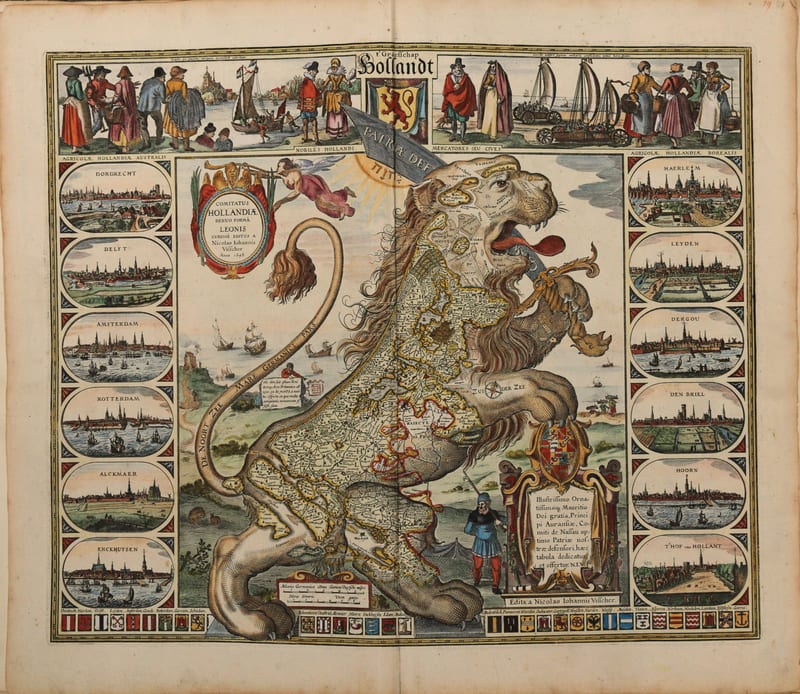
Cartography · FM-0079
Composite atlas, without title
Reinier and Josua Ottens, with maps by Visscher, De Wit, Delisle, Jaillot, Covens & Mortier, Schenk, Valk and others · Amsterdam · No date, but 1730 or shortly after
Price on request
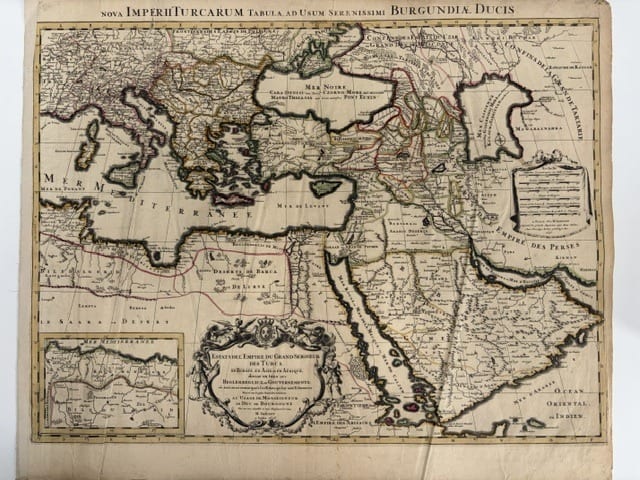
Antique Maps · FM-0158
Estats de l'Empire du Grand Seigneur des Turcs, en Europe, en Asie et en Afrique (The Ottoman Empire), à l'usage de Monseigneur le Duc de Bourgogne
JAILLOT, Alexis-Hubert, after Nicolas Sanson · Paris · 1696
€ 800
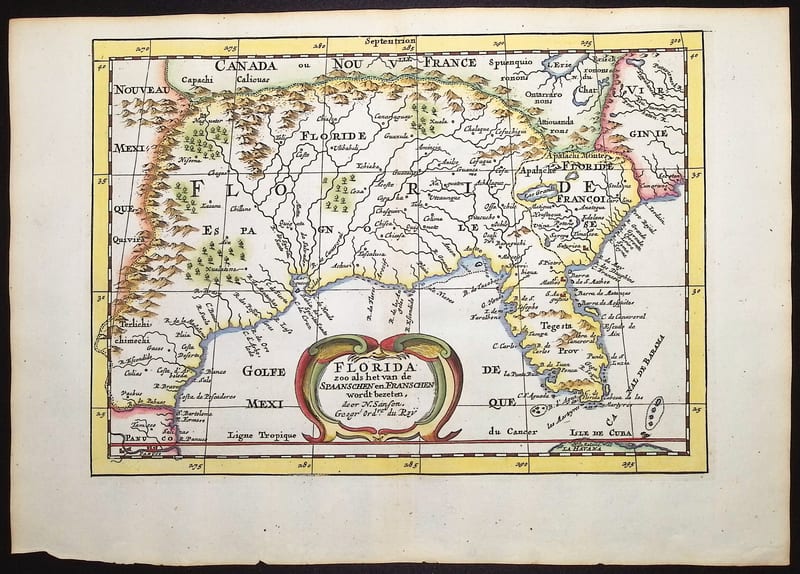
Antique Maps · FM-0053
Florida zoo als het van de Spaanschen en Franschen wordt bezeten (Florida as held by the Spanish and the French)
SANSON, Nicolas (engraved by Anthonie de Winter) · Utrecht and Amsterdam · 1705
€ 700
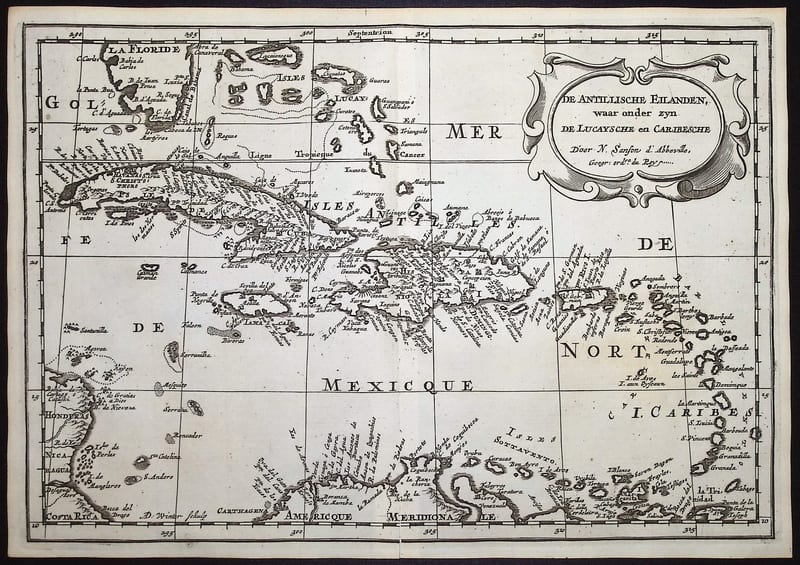
Antique Maps · FM-0052
De Antillische Eilanden, waar onder zyn de Lucaysche en Caribesche (The West Indies)
SANSON, Nicolas (engraved by Anthonie de Winter) · Utrecht and Amsterdam · 1705
€ 380
All 5 works: Nicolas Sanson and Hubert Jaillot →