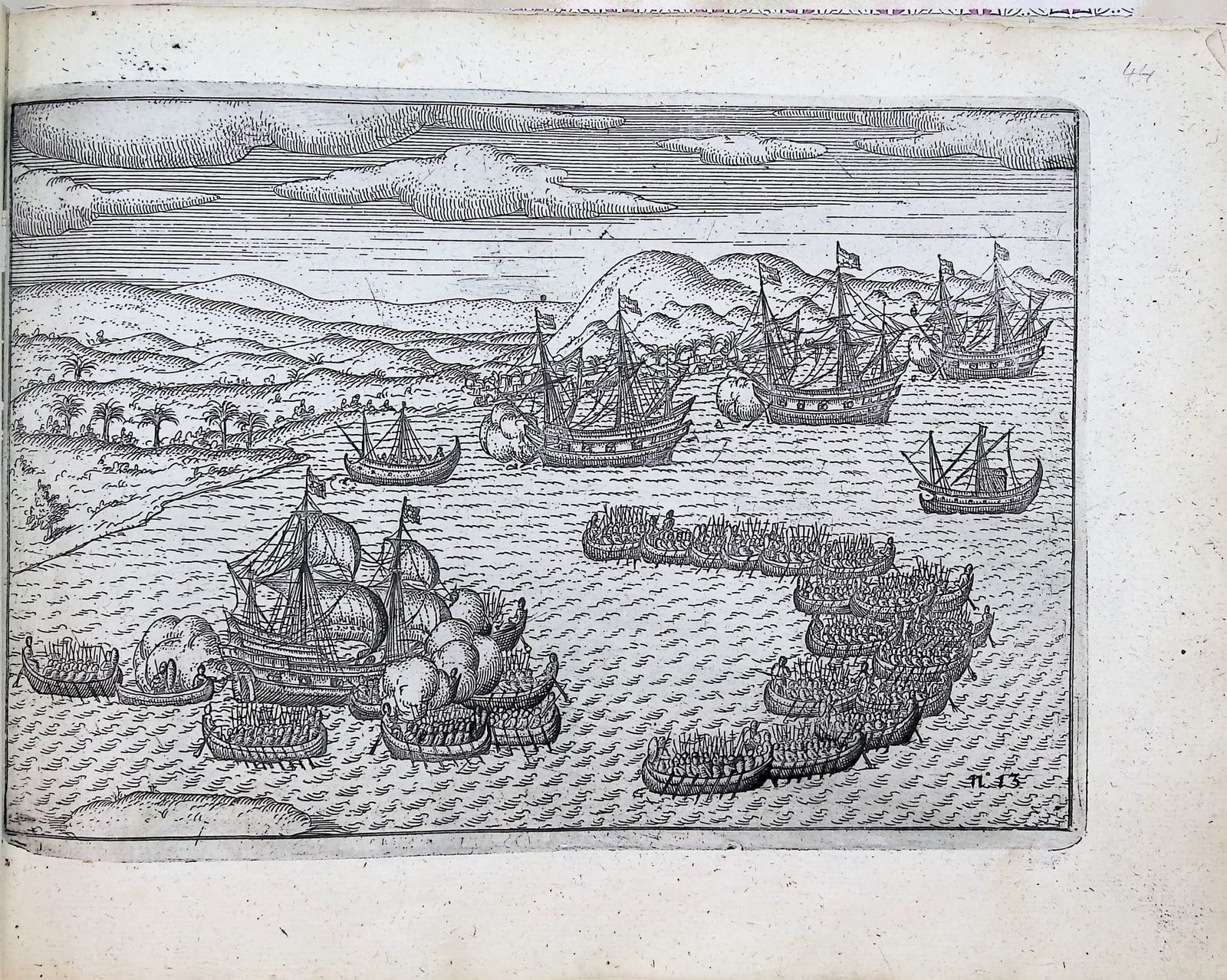
Voyages & Discovery
Eerste schipvaerd der Hollandsche Natie naar Oost-Indien
Willem Lodewijckszoon · Amsterdam · Commelin · 1646
The first Dutch voyage to the East Indies under Cornelis de Houtman; Commelin's Amsterdam edition of 1646
FM-0070
€ 2.400
Key Properties
Format: Oblong quarto
Binding: Modern binding
Illustration: 48 of 49 plates, of which 5 are maps (blank on the verso)
Language: Dutch
Source: Part of Commelin's collection of voyages
Collation & Technical Description
Oblong quarto. 112 pages, plus 48 of 49 plates, of which 5 are maps (blank on the verso). Lacking one plate, as often, the market at Bantam, here supplied in facsimile. Bound in a modern binding.
Condition
A good copy in a modern binding. Lacking one plate as usual, the Bantam market, which is present in facsimile.
References & Bibliography
Tiele, Memoire, 119. Rouffaer and IJzerman (1925).
Description
The account of the first Dutch voyage to the East Indies, undertaken by five ships under Cornelis de Houtman, here in the edition published at Amsterdam by Commelin in 1646. The voyage was a hard one: only a single ship returned safely two years later, and some eighty per cent of the crew had died.
Two different journals of the voyage had appeared earlier, published by Langenes at Middelburg in 1597 and 1598 under the titles Verhael van... and Journael van... Of the former only one copy is now known to survive, in the Mitchell Library in Sydney; the latter Journael provided the text that John Wolfe used for his English edition in London in 1598. The first Amsterdam edition, under the title d'Eerste Boeck, was issued by Cornelis Claeszoon in April 1598.
The author, Willem Lodewijckszoon, was a senior officer on the fleet and its most reliable chronicler. His account, published by Cornelis Claeszoon in Amsterdam in 1598 as d'Eerste Boeck, was an instant success, reprinted many times and translated into several languages. The fleet navigated with the aid of the sailing directions of Jan Huyghen van Linschoten, which had revealed the Portuguese routes to the Indies. Though only a modest commercial success, the voyage proved that the Portuguese monopoly on the spice trade was vulnerable, and set off the wave of Dutch expeditions that led to the founding of the Dutch East India Company (VOC) in 1602. The work also contains the first continuous European description of Bali and the most detailed descriptions of Java to that date.
Related works
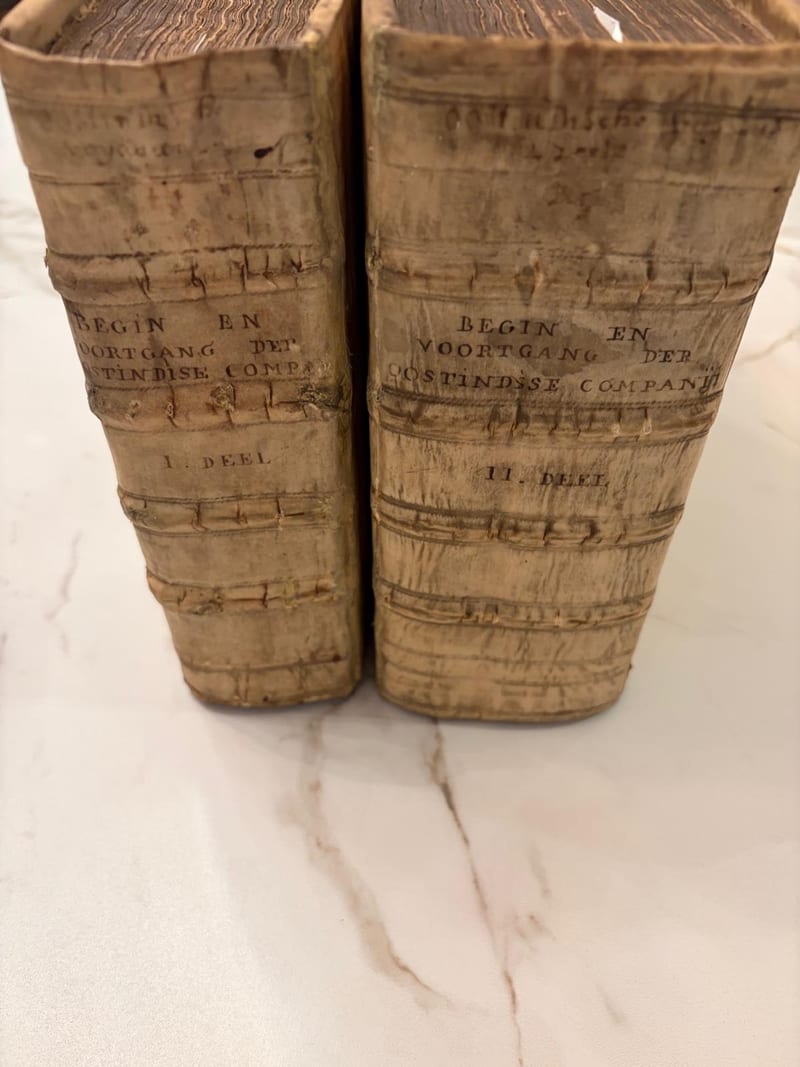
Voyages & Discovery · FM-0044
Begin ende Voortgangh van de Vereenighde Nederlantsche Geoctroyeerde Oost-Indische Compagnie
Isaac Commelin (compiler and editor) · Amsterdam · 1646
Price on request
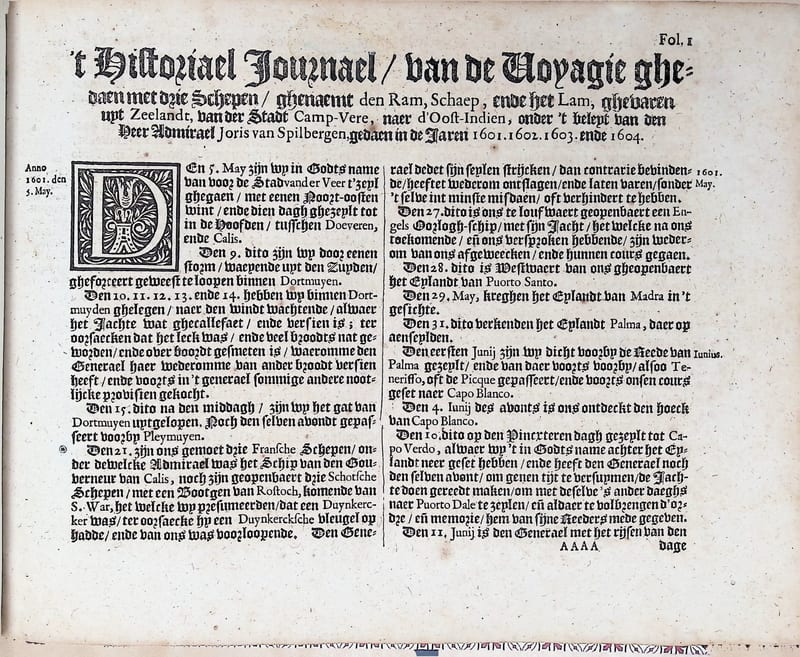
Voyages & Discovery · FM-0057
Historisch Journael, Spilbergen's Voyagie naar Oost-Indien (1601–1604)
Joris van Spilbergen (with Wolfhart Harmanszoon & Cornelis van Veen) · Amsterdam · 1646
€ 3.500
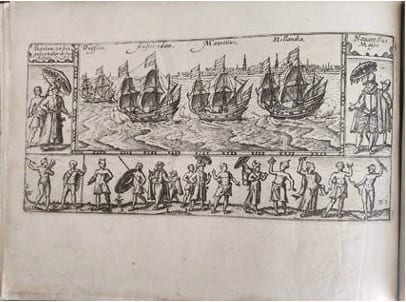
Voyages & Discovery · FM-0047
Waerachtigh verhael van de tweede Schipvaerd op Oost-Indien (van Neck & van Warwijck)
Jacob van Neck & Wijbrant van Warwijck · Amsterdam · 1646
€ 3.200
Voyages & Discovery · FM-0063
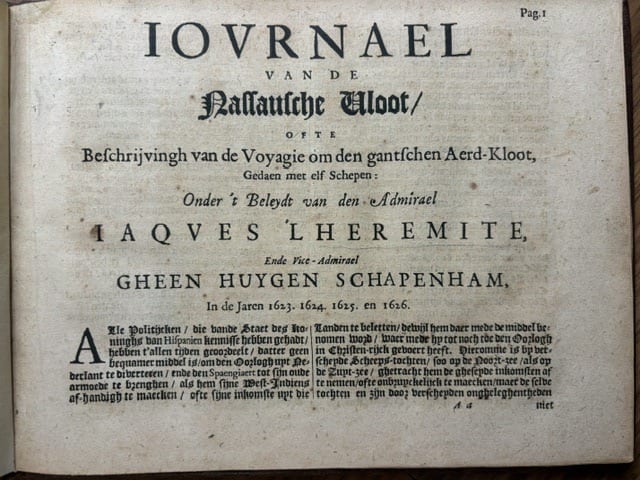
Journael van de Nassausche vloot, ofte beschrijvingh van de voyagie om den gantschen aerd-kloot, gedaen met elf schepen onder 't beleyt van admirael Jacques L'Hermite
Jacques L'Hermite · Amsterdam · 1646
€ 2.500
All 8 works: Isaac Commelin, Begin ende Voortgangh → · Isaac Commelin, Begin ende Voortgangh · The Dutch East India Company (VOC)