Antique Views
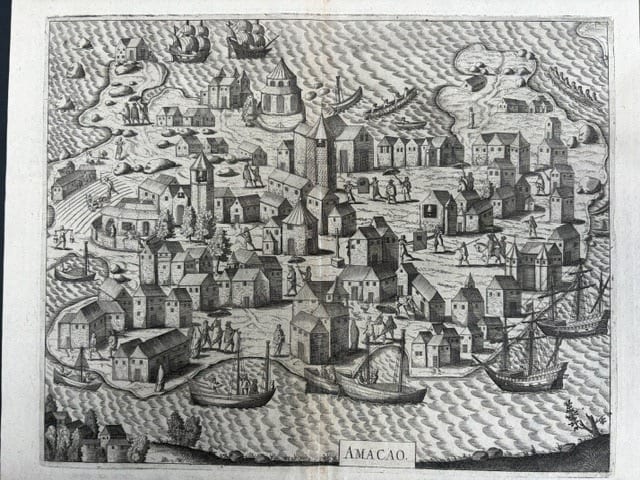
Amacao (Macao): the first printed view of Macao
DE BRY, Johann Theodor and Johann Israel · Frankfurt am Main · Johann Theodor and Johann Israel de Bry · 1607
The first printed view of Macao, the earliest European settlement in China, from the Latin edition of Part VIII of De Bry's Petits Voyages, Frankfurt 1607, in the second state with the tree in the lower right corner
FM-0100
€ 4.000
Key Properties
Edition: Latin edition of Part VIII of the Petits Voyages (Indiae Orientalis pars octava), Frankfurt 1607
State: Second state, with the tree added in the lower right corner (the first state appeared in the German edition of 1606)
Language: Latin edition; the plate lettered only with the title AMACAO
Format: Copperplate engraving on laid paper
Dimensions: Sheet 29 x 36 cm (height x width)
Colouring: Uncoloured, as issued
Collation & Technical Description
A single sheet with the engraved bird's-eye view within a single ruled border, the title AMACAO in a small panel at the foot. The Portuguese settlement is seen across the water from the west, spread over the low hills of the peninsula: rows of tiled houses with their courtyards, several churches and chapels with belfries and crosses, the round domed building near the shore, a fort and a square with a large crucifix. In the foreground and along the shore are Portuguese carracks and lighter craft, Chinese junks and sampans, and the streets are enlivened with figures of Portuguese and Chinese inhabitants, a sedan chair, porters and men with umbrellas. The wooded shore of the neighbouring island fills the lower left corner, with the small tree of the second state in the lower right. Blank verso as issued.
Condition
A good, even impression with ample margins; no restorations. Light, even age-toning and the customary horizontal fold. A fine example.
References & Bibliography
Church (Latin India, Part VIII, Frankfurt 1607). Huth and Ellis, A Description and Collation of the Series of De Bry's Voyages. Wattis Fine Art, Early Views and Maps of Macau, 1570 to 1890 (Hong Kong 1999). Mariz Carneiro, Antonio de, Descricao da Fortaleza de Sofala e das mais da India (Lisbon, Fundacao Oriente, 1990), for the earliest manuscript views of Macao. Suarez, Early Mapping of Southeast Asia (Singapore 1999), on the De Bry East India series.
Description
The earliest printed view of Macao, and thus the first image of a European settlement in China to reach the public of Europe. It was published by the sons of Theodor de Bry in Part VIII of the Petits Voyages, the great De Bry collection of voyages to the East Indies, which appeared at Frankfurt in a German edition in 1606 and in this Latin edition in 1607. The plate exists in two states: the first, in the German edition, and the present second state, distinguished by the small tree added in the lower right corner. The differences are otherwise marginal.
The Portuguese had settled at Macao in the 1550s, and for the rest of the century it was the only permanent European foothold on the Chinese coast, the hinge of the trade between Goa, Malacca, China and Japan. The Portuguese were also the first to depict the place, but their images were manuscript drawings that never reached print. The De Bry engraving gave Europe its first convincing bird's-eye view of the city: the houses and churches spread along the low hills of the peninsula, the domed building near the shore, the square with its great cross, the carracks riding at anchor and the junks and sampans of the Chinese. The engravers evidently worked from a drawing brought back by the Dutch, who were at that moment probing the Portuguese position in the China seas.
The view remained the standard image of Macao for decades and was copied and adapted well into the seventeenth century. As the first printed representation of the city, it is a foundational document for the history of Macao and of the European presence in China.
Historical Significance
Macao was the gateway through which European trade, missionaries and knowledge entered China, and the base from which the Jesuits reached Beijing. This view appeared at the very moment when the Dutch East India Company, newly founded in 1602, began to challenge the Portuguese monopoly in Asian waters; the Dutch would attack Macao itself in 1622. For the European reader of 1607 the plate was the first sight of a Chinese city under Portuguese rule, and it stands at the head of the printed iconography of Macao.
Provenance
Available on request.
Related works
Voyages & Discovery · FM-0022
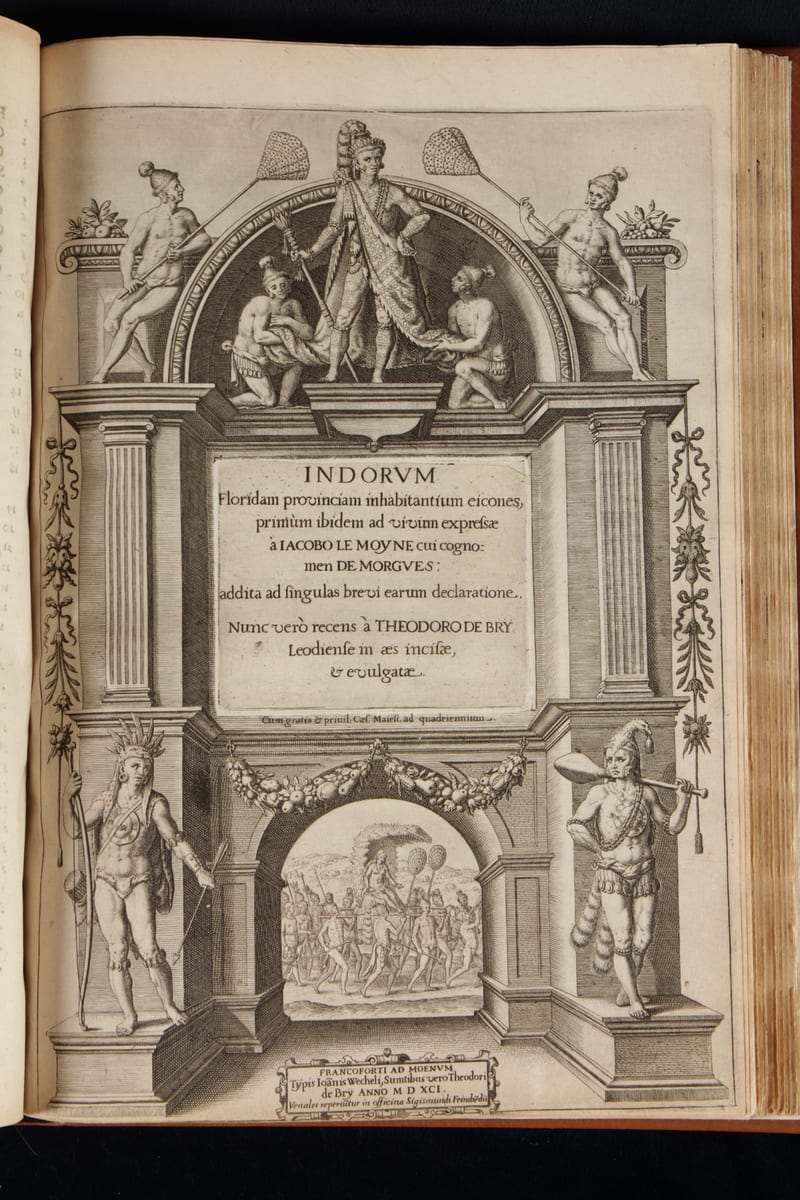
Grands Voyages & Petits Voyages, The Complete De Bry
Theodor de Bry (1528–1598) and sons Johann Theodor & Johann Israel de Bry · Frankfurt · 1590–1634
Price on request
Antique Maps · FM-0102
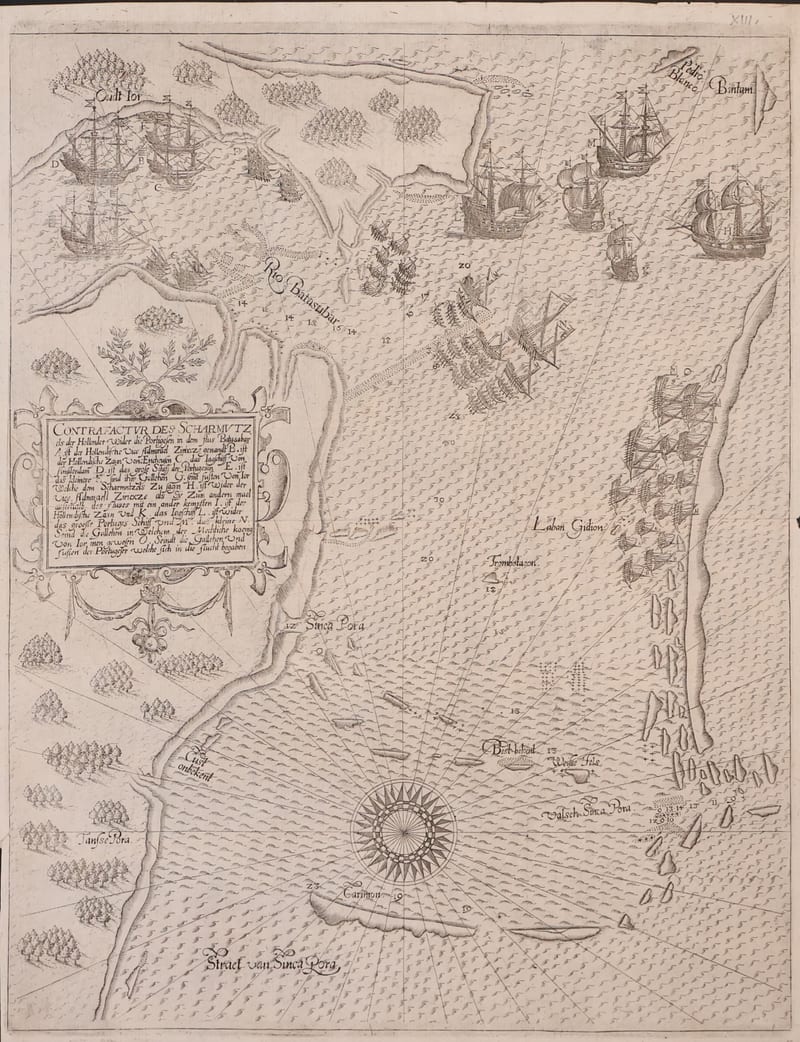
Contrafactur des Scharmutzels der Hollender wider die Portugesen in dem Flus Balusabar (Singapore and the Singapore Strait)
DE BRY, Johann Theodor and Johann Israel · Frankfurt am Main · 1606
€ 10.000
Antique Maps · FM-0136
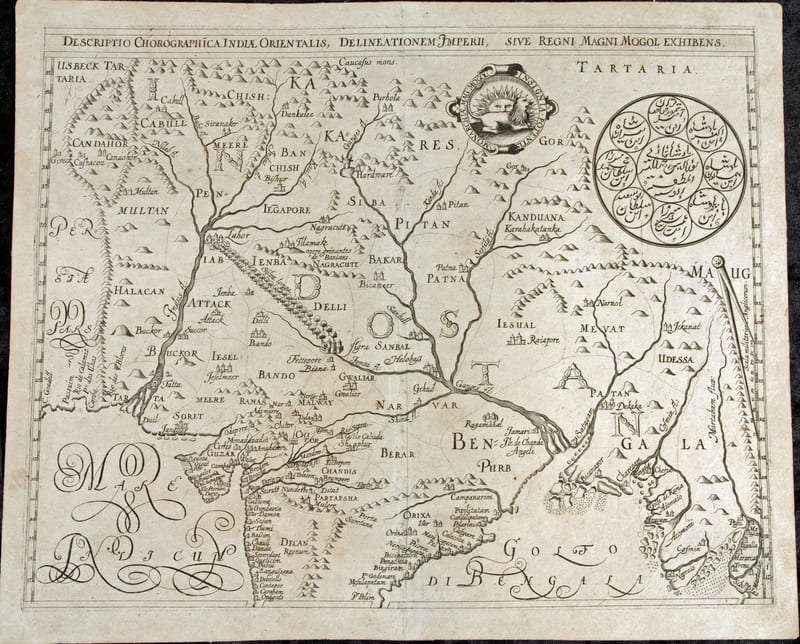
Descriptio Chorographica Indiae Orientalis, Delineationem Imperii, sive Regni Magni Mogol Exhibens (The Mughal Empire)
DE BRY, Johann Theodor and Johann Israel, after William Baffin · Frankfurt am Main · 1628
€ 5.500
Voyages & Discovery · FM-0114
Americae nona & postrema pars
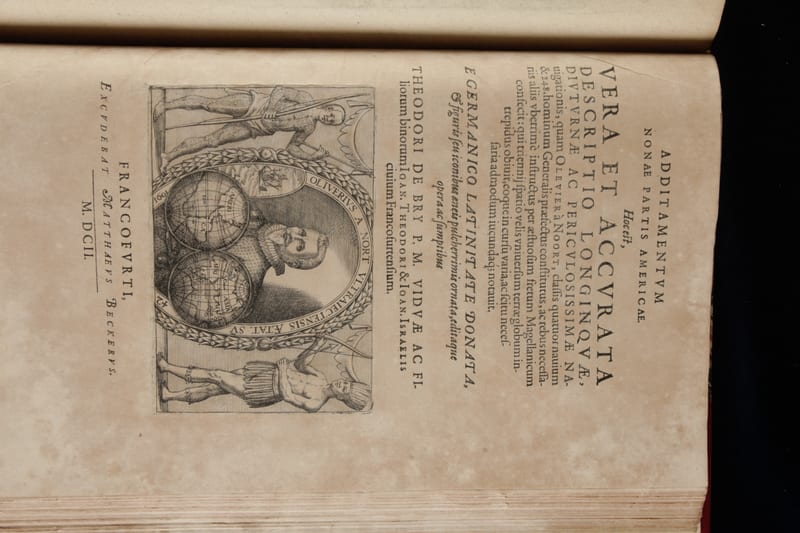
Theodor de Bry (issued by his sons Johann Theodor and Johann Israel de Bry); José de Acosta, Bernard Janszoon on Sebald de Weert, and Olivier van Noort · Frankfurt am Main · 1602
Price on request
All 5 works: Theodor de Bry and his sons → · Theodor de Bry and his sons · The Dutch East India Company (VOC)