Science
Tratado de barnices y charoles
Cantelli, Genaro · Valencia · Dolz · 1735
First Spanish treatise on varnishes and lacquers, opening with the use of lacquer in China and Persia and closing with 93 'secret' recipes; small octavo in contemporary limp vellum.
FM-0175
€ 800
Key Properties
Author: Genaro Cantelli
Title: Tratado de barnices y charoles
Imprint: Valencia, Dolz, 1735
Edition: First Spanish edition
Format: Small octavo (8vo)
Binding: Contemporary limp vellum, title in manuscript on the spine
Collation: [6] leaves, 286 pages
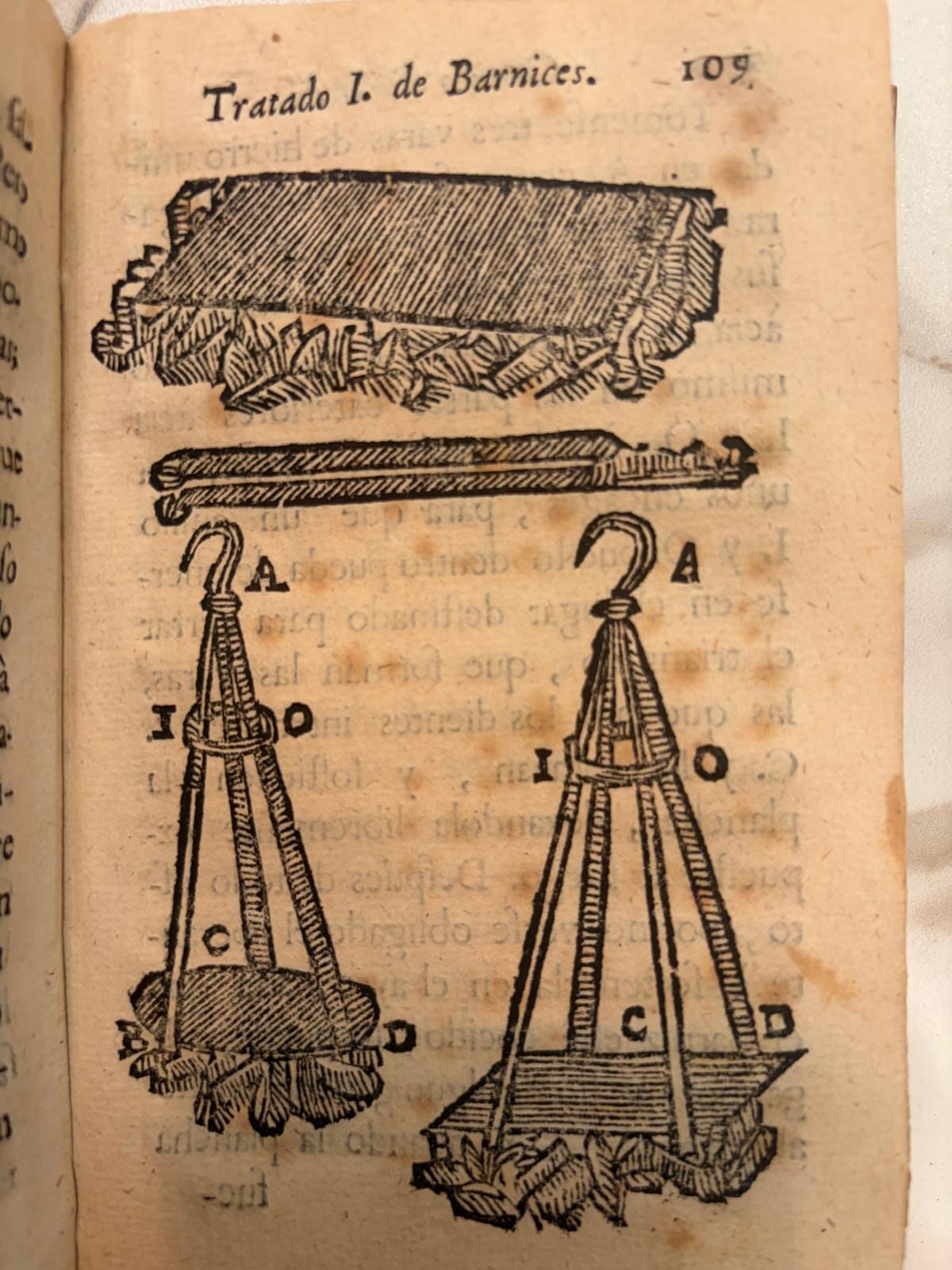
Illustration: Full-page woodcuts in the text
Collation & Technical Description
Small octavo. [6] unnumbered leaves, 286 pages. Illustrated throughout with full-page woodcuts of a simple, vigorous cut. Contemporary limp vellum, the title lettered in manuscript on the spine.
Condition
In contemporary limp vellum, the title in manuscript on the spine.
References & Bibliography
Palau 42612.
Description
The first Spanish treatise on varnishes, lacquers and enamels. Cantelli opens with a historical account of lacquer and its use in China, drawing on Martino Martini (whose Novus Atlas Sinensis was published by Blaeu in Amsterdam in 1655) and on Athanasius Kircher, and continues with its names and uses in Persia, New Spain (Mexico) and elsewhere. He then describes a series of methods for dissolving the resins tapped from trees in different solvents such as turpentine and spirits of wine, comparing the resin with amber as described centuries earlier by Dioscorides and Avicenna. Short instructions follow for making the various varnishes, Chinese, Turkish and others; these first 42 pages form a historical introduction leading to the heart of the book, how varnish should truly be made (pp. 42-134). The following part explains how to integrate silver and gold with varnish and how to prepare varnish in colour. The work closes with 93 'secret' recipes for the use of varnish on stone, frescoes, wood and other supports, and a detailed index.
Historical Significance
Published in Valencia in 1735, this is the earliest treatise on varnishing and japanning to appear in Spanish, at the height of the European fashion for Chinese and Japanese lacquer. It stands at the meeting point of craft and the age of exploration: the knowledge it opens with reached Europe through the Jesuit missions to China, through Martini's atlas printed by Blaeu in Amsterdam and through the writings of Athanasius Kircher, and was put to work in Spanish and colonial workshops from Valencia to New Spain. A second impression followed at Pamplona in 1755, evidence of the lasting demand for the work. Copies of the first edition in their original limp vellum are uncommon on the market.
Related works
Science · FM-0073
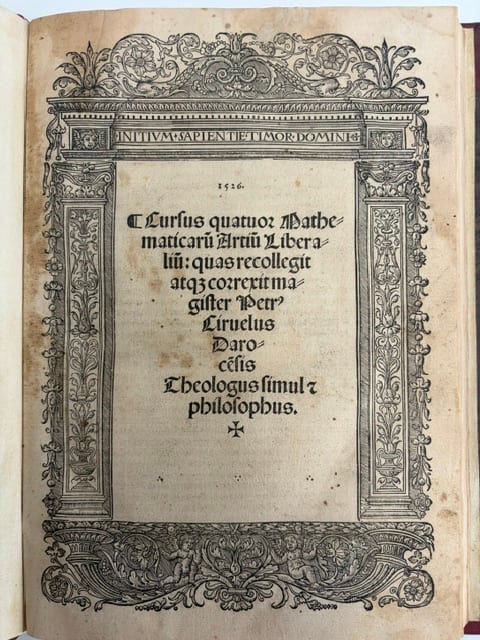
Cursus quattuor mathematicarum artium liberalium
CIRUELO, Pedro · Alcalá de Henares · 1516-1528
Price on request
Science · FM-0089
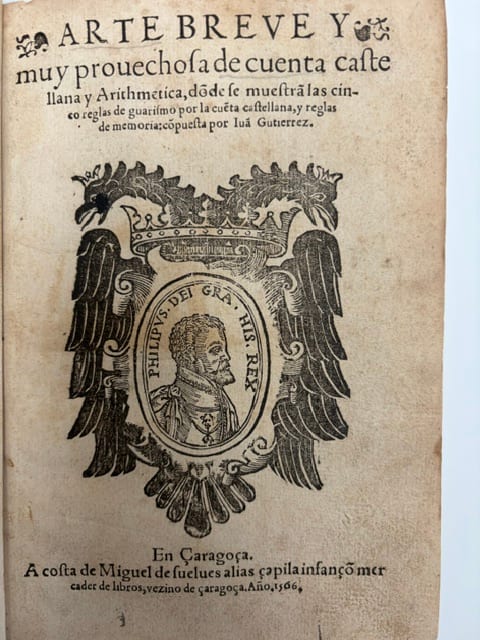
Arte breve y muy provechosa de cuenta castellana y Arithmetica
Gutierrez de Gualda, Juan · Zaragoza · 1566
€ 18.000
Books · FM-0200
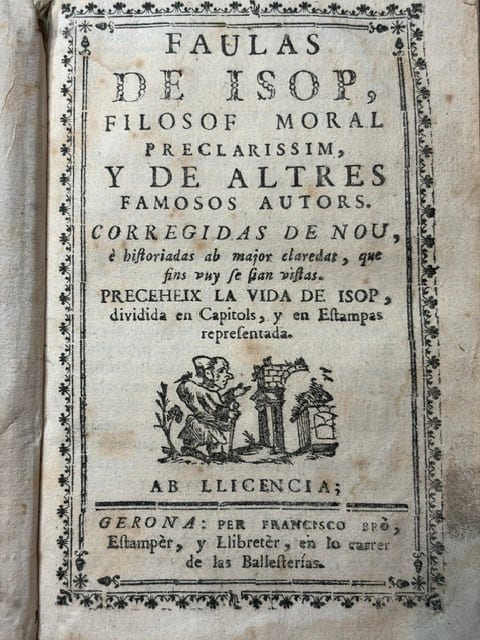
Faulas de Isop, filosof moral preclarissim, y de altres famosos autors. Corregidas de nou, e historiadas ab major claredat, que fins vuy se sian vistas. Preceheix la vida de Isop, dividida en capitols, y en estampas representada
Aesop (Isop) · Girona (Gerona) · n.d., c. 1790
€ 12.000
Voyages & Discovery · FM-0092
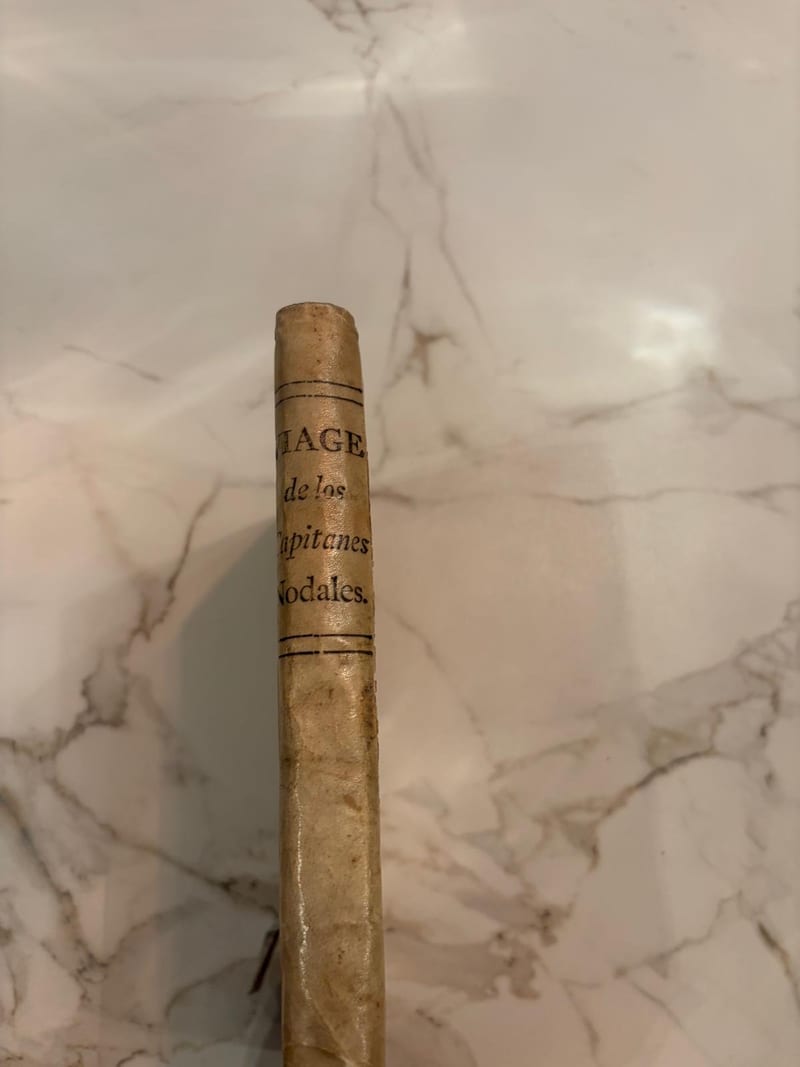
Relacion del viaje que por orden de su Magestad y acuerdo del Real Consejo de Indias hizieron los capitanes Bartolome Garcia de Nodal y Gonzalo de Nodal
Bartolomé García de Nodal and Gonzalo de Nodal · Cádiz · 1769
€ 8.400
All 7 works: Spanish books of science and the Indies →