Prints & drawings
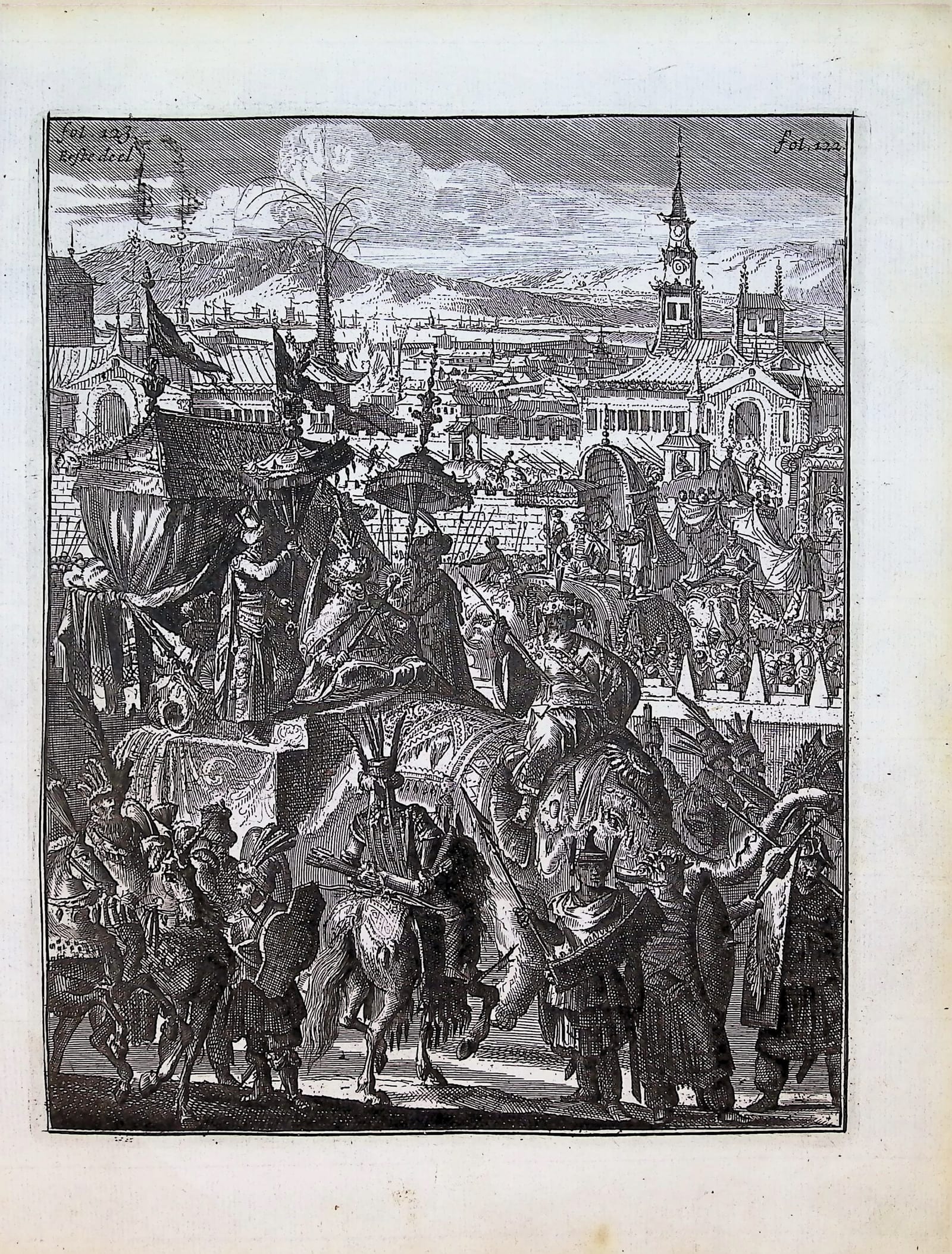
The King of Arakan riding out in state (from Wouter Schouten, Oost-Indische Voyagie)
SCHOUTEN, Wouter · Amsterdam · Jacob Meurs and Johannes van Someren (first edition 1676) or Andries van Damme (second edition 1708) · 1676 or 1708
Engraved plate from Wouter Schouten's Oost-Indische Voyagie showing the king of Arakan (Rakhine, Myanmar) riding out with his court, elephants and cavalry, the earliest printed view of the Arakanese court from a Dutch eyewitness.
FM-0207
€ 125
Key Properties
Work: Wouter Schouten, Oost-Indische Voyagie, Amsterdam; the plate belongs to the first part ('Eerste deel') and is keyed to folios 122-123, as engraved in the upper corners.
Edition: the plate was used in the first edition (Meurs and Van Someren, 1676) and again in the second (Van Damme, 1708); which impression this is has not yet been determined from paper and watermark.
Subject: the king of Arakan leaving his palace in procession, seated under a canopy on a raised platform, preceded by armed horsemen in plumed headdresses and by war elephants with howdahs, with the walled city, its pagoda-like towers and the harbour with ships beyond.
Technique: copper engraving.
Dimensions: leaf 18 x 23 cm.
Verso blank.
Collation & Technical Description
One engraved leaf, verso blank, the plate with folio references engraved in the upper corners ('Fol. 123, Eerste deel' and 'Fol. 122'). The leaf 18 x 23 cm.
Condition
Good. Paper lightly age-toned with scattered small fox spots in the margins, the impression strong and clean, full margins and platemark present.
References & Bibliography
Landwehr, VOC: A Bibliography of Publications relating to the Dutch East India Company (Schouten, Oost-Indische Voyagie, editions of 1676 and 1708). Tiele, Nederlandsche bibliographie van land- en volkenkunde (Schouten).
Description
Wouter Schouten (1638-1704), a surgeon from Haarlem, sailed to the East in the service of the Dutch East India Company in 1658 and spent seven years in Asia, serving on the Company's ships and in its factories from Batavia to Bengal, Ceylon and the coast of Arakan. His Oost-Indische Voyagie, first published at Amsterdam in 1676 and reissued in 1708, is one of the liveliest of the Dutch travel accounts of the seventeenth century, written by an observer who took a doctor's interest in everything he saw, and it was illustrated with a series of engraved plates made after his own drawings.
The present plate illustrates his stay at Mrauk U, the capital of the kingdom of Arakan on the eastern shore of the Bay of Bengal, where the Company kept a factory for the trade in rice and slaves. Schouten describes the king riding out in state with his court, a spectacle of elephants, cavalry and guards that impressed every European visitor. The engraver shows the monarch seated under a canopy on a raised litter, surrounded by attendants with fans and parasols, while plumed horsemen and war elephants file past in the foreground and the walled city with its towers and the harbour crowded with ships fills the background.
The plate belongs to the first part of the book and is keyed to folios 122-123, where the description of the Arakanese court is printed. Arakan was conquered by Burma in 1784 and its capital fell into ruin, so that Schouten's plates, together with those of the Augustinian friar Sebastião Manrique's earlier account, remain among the very few contemporary images of the kingdom at its height.
Historical Significance
Arakan in the seventeenth century was an independent Buddhist kingdom with a cosmopolitan court, a fleet that raided the Bengal delta and a trade in rice, elephants and slaves in which the Dutch East India Company took an eager part. Few Europeans left descriptions of it, and Schouten, who was there in the 1660s, is the principal Dutch witness. This plate is the best-known image from his book and one of the earliest printed representations of an Arakanese royal procession.
Provenance
Frederik Muller Rare Books, Amsterdam (stock of the firm).
Related works
Voyages & Discovery · FM-0022
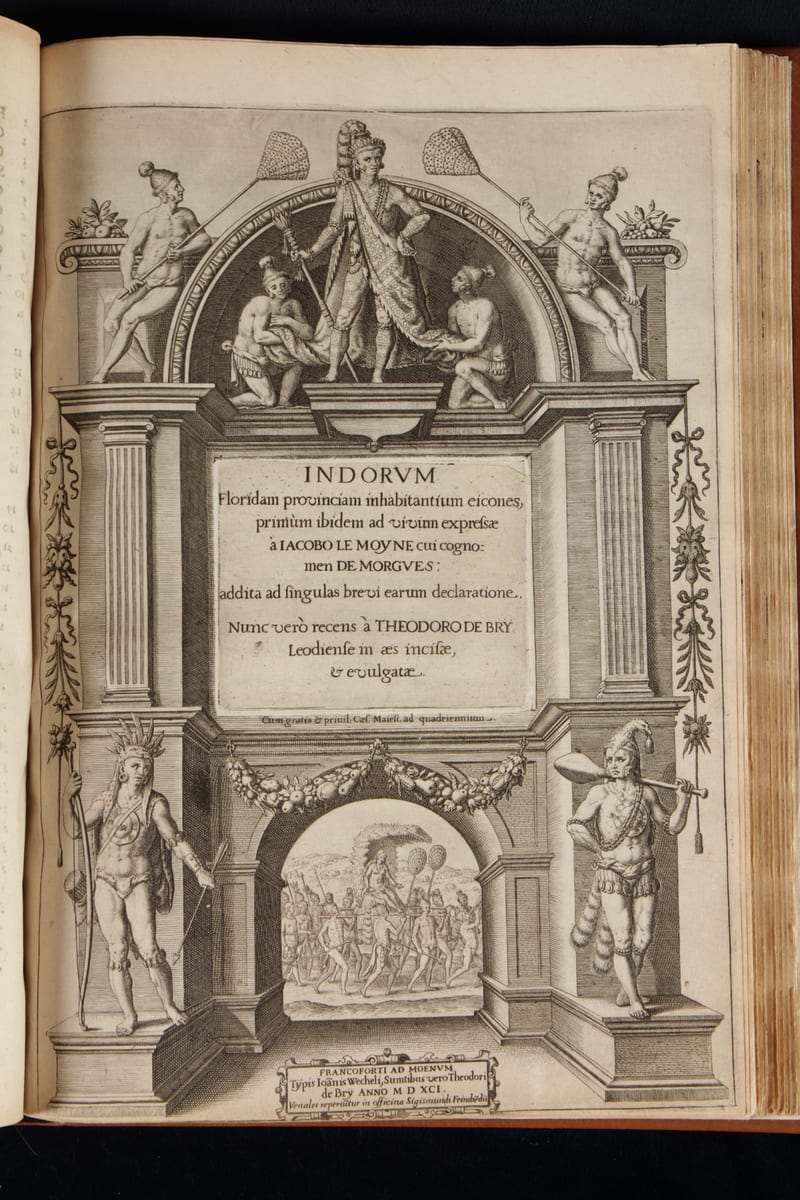
Grands Voyages & Petits Voyages, The Complete De Bry
Theodor de Bry (1528–1598) and sons Johann Theodor & Johann Israel de Bry · Frankfurt · 1590–1634
Price on request
Voyages & Discovery · FM-0026
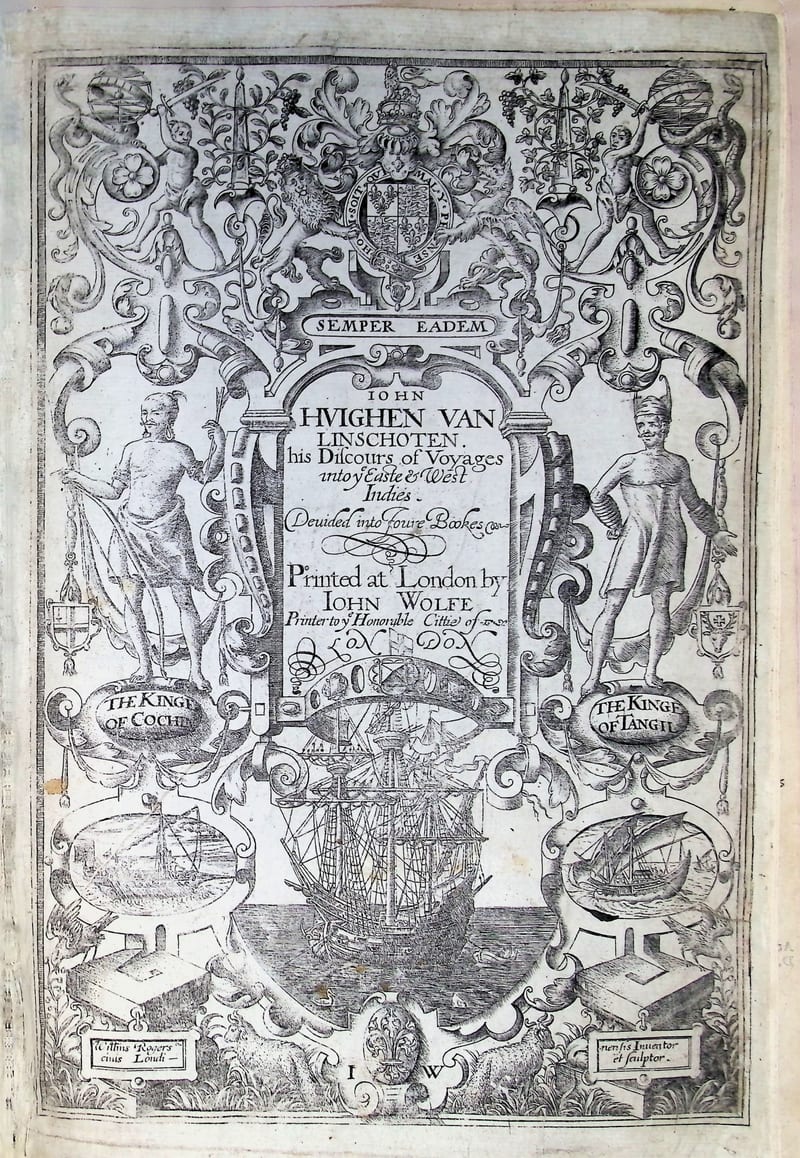
John Huighen van Linschoten his Discours of Voyages into ye Easte & West Indies
Jan Huygen van Linschoten (translated by William Phillip) · London · 1598
Price on request
Voyages & Discovery · FM-0044
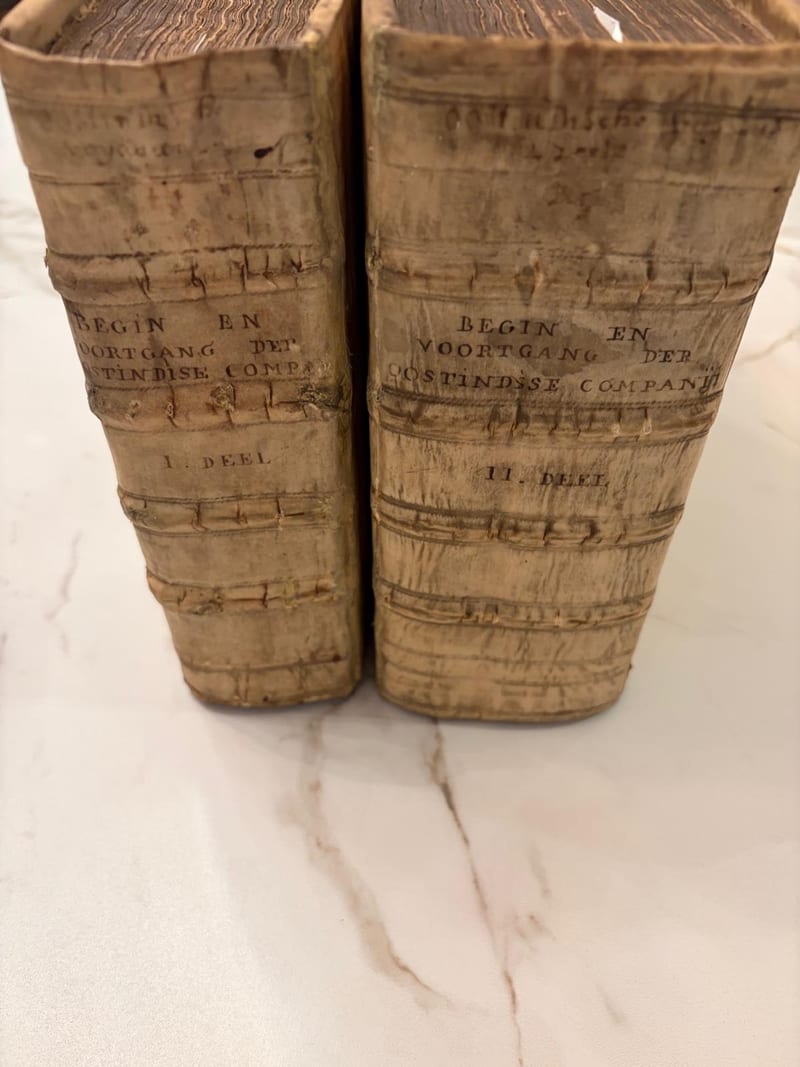
Begin ende Voortgangh van de Vereenighde Nederlantsche Geoctroyeerde Oost-Indische Compagnie
Isaac Commelin (compiler and editor) · Amsterdam · 1646
Price on request
Voyages & Discovery · FM-0030
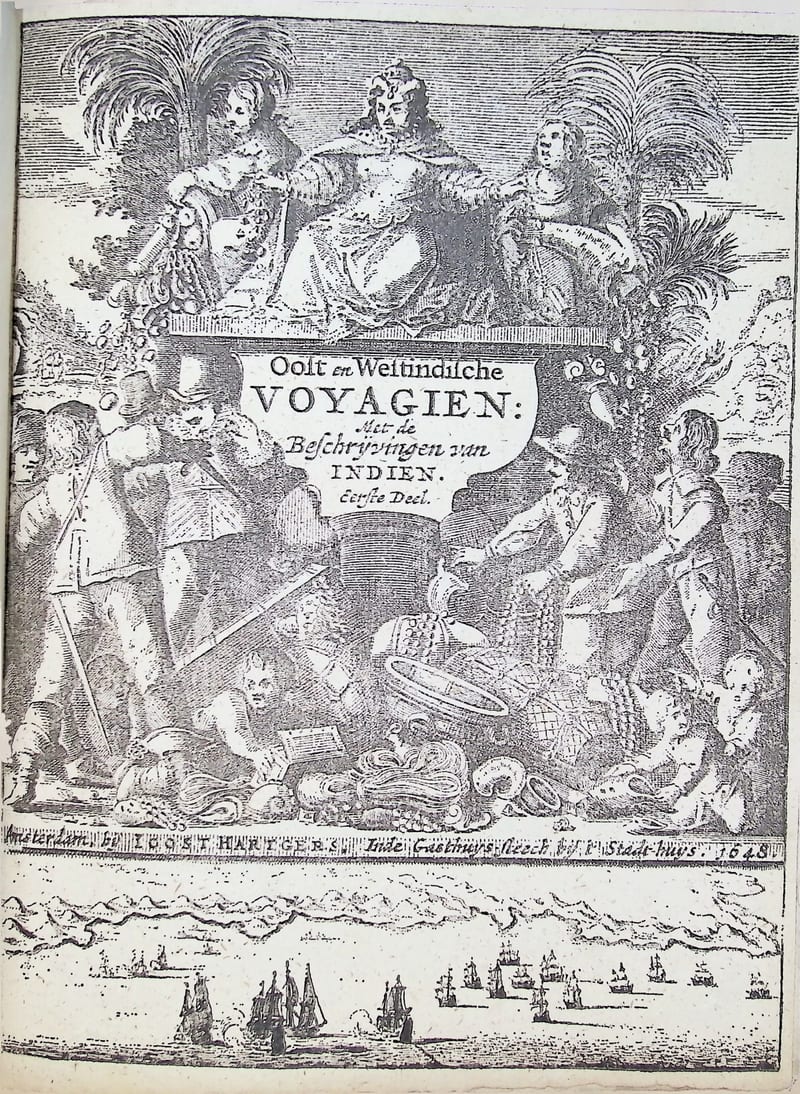
Oost-Indische voyagien
Joost Hartgers (collector & printer); various authors · Amsterdam · 1648
Price on request
All 27 works: The Dutch East India Company (VOC) →