Voyages & Discovery
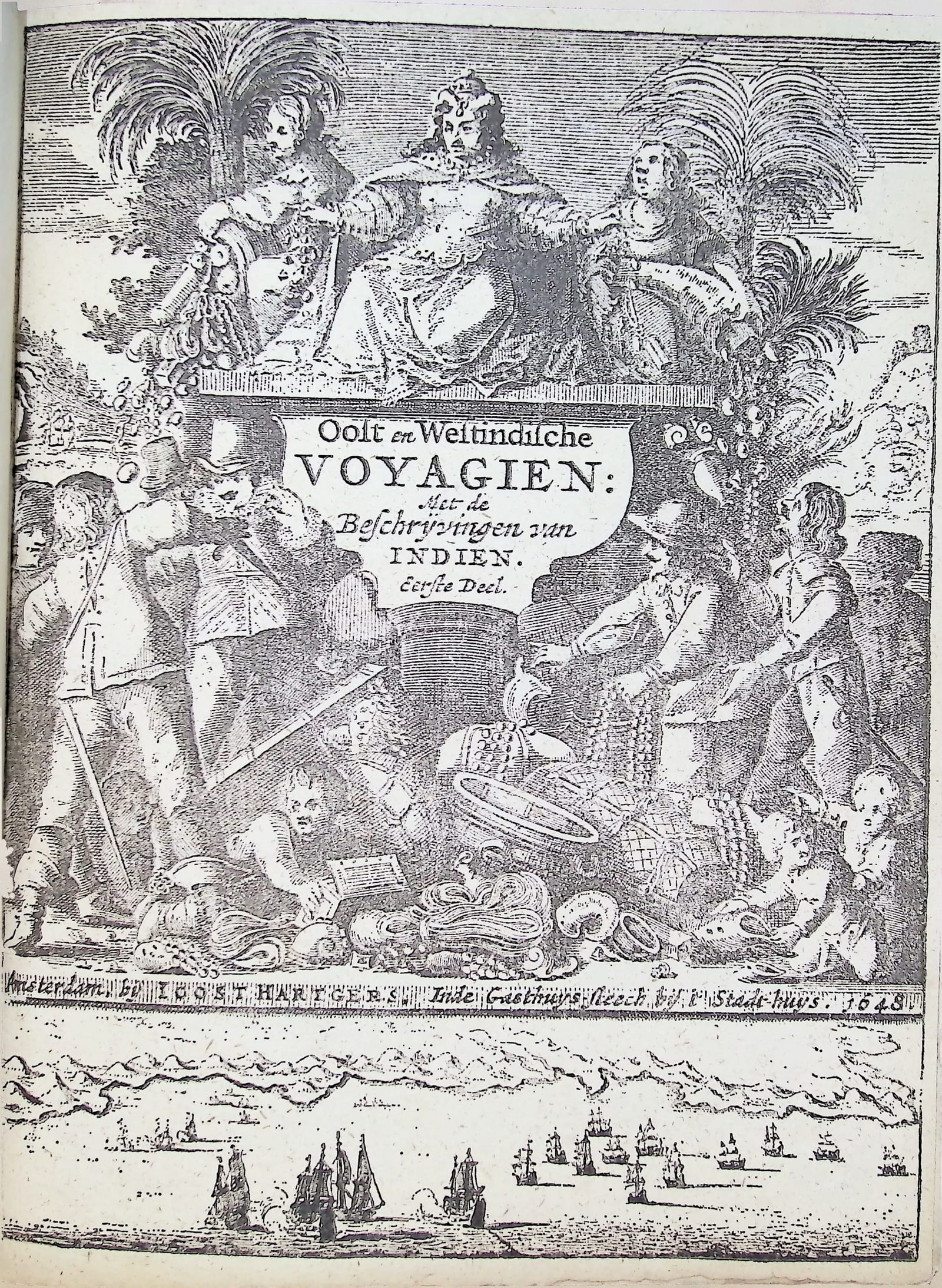
Oost-Indische voyagien
Joost Hartgers (collector & printer); various authors · Amsterdam · Joost Hartgers · 1648
Joost Hartgers' collection of eighteen early Dutch voyages to the East Indies, 1594–1640
FM-0030
Price on request
Key Properties
Edition: Eerste deel (the only part published)
Language: Dutch
Format: Small quarto
Binding: Modern vellum in embossed contemporary style
Contents: 18 voyages in 16 journals; 11 folding plates (6 engravings each)
Collation & Technical Description
Engraved title-page printed on contemporary paper in excellent facsimile. 24 pp. general introduction; 16 journals, each preceded by a title-page with an engraved vignette; 11 folding plates, each with 6 engraved illustrations. Overall in excellent condition.
Condition
Overall in excellent condition.
References & Bibliography
Tiele 1179; Landwehr, VOC 251; Sabin 30680. Pelsaert section: Tiele, Mémoires 237. Cf. V. D. Roeper, De schipbreuk van de Batavia, 1629 (Walburg Pers, 2022).
Description
An exquisite and rare collection of eighteen early Dutch voyages of commercial conquest and discovery to the East Indies between 1594 and 1640, collected, edited and printed by Joost Hartgers, Oost-Indische voyagien, the 'Eerste deel' and the only part ever published. It embraces the thirteen early Dutch travelogues published by Commelin in 1646, with four additions: Bontekoe's voyage and the explosion of his ship (1619); Raven's shipwreck and overwintering on Spitsbergen (1639); and Pelsaert's wreck of the Batavia off the coast of Australia. It is in this edition that minister Gijsbert Bastiaensz's letter from Batavia is printed for the first (and only) time, the first contemporary printed testimony of the atrocities committed by the mutineers under Jeronimus Cornelisz. The collection ends with François Caron's description of Japan.
The introduction, by Hartgers, surveys the Dutch voyages of 1594–1645, including the full text of the formal government acts that regulated them. The great advantage of the collection is that everything is given in the original language, neither summarised nor translated, making it a reliable source for research. Sabin notes that the Hartgers collection is sometimes called the Dutch de Bry or Hulsius, for in beauty of execution and intrinsic interest it rivals those famous collections.
Contents (eighteen voyages in sixteen journals, each journal with an engraved title-page and, mostly, a folding plate of six engravings):
I. Gerrit de Veer, Kort verhael van d'eerste schipvaerdt by Noorden om (V01; 56 pp.), the three consecutive voyages under Willem Barentsz (1594, 1595, 1596) in search of the North-East Passage to the Indies.
II. Willem Lodewijcksz, Eerste schip-vaert der Hollanders naer Oost-Indien (V02; 102 pp.), the first Dutch voyage, under Cornelis de Houtman; among the five ships was the Duyfken, later the first European vessel to reach Australia.
III. Waerachtigh verhael van de schipvaert op Oost-Indien (V03; pp. 1–60), the second Dutch voyage, under Jacob van Neck; all ships returned and the profit exceeded 400%, the journal including a Dutch–Malay–Javanese vocabulary. With De voyagie van Sebald de Weert naer de Strate van Magalanes (V04; pp. 61–92), the first Dutch attempt to reach the Indies westward through the Strait (1598); De Weert did not reach the Pacific, but William Adams did, wrecked on the coast of Japan, where he survived fifteen years (the 'Samurai William').
IV. Wonderlijcke voyagie… door de Strate van Magelanes (V05; pp. 1–58), Olivier van Noort's circumnavigation, the first by the Dutch, 1600–02. With Roelof Roelofsz, Kort en waarachtig verhael van de tweede schipvaert (V06; pp. 59–88), Van Neck's second voyage from another hand.
V. Historisch journael… Joris van Spilbergen (V07; pp. 3–61). With Beschrijvinghe van de tweede voyagie met twaalf schepen… Steven van der Hagen (V08; pp. 62–95), the siege and occupation of the Portuguese trading posts and fortresses on Amboina and Tidore; including Gasparo Balbi's description of Cochin and the cities of Pegu and Ceylon (pp. 71–91).
VI. Journael… treffelijcke reyse naer Oost-Indien ende China (V09; pp. 1–145; printed by Adriaen Harmensz Roest, 1648), Cornelis Matelief's war-and-trade mission to South-East Asia with eleven ships: the treaty between the King of Johor and Matelief; the conquest and description of Malacca; Java; the Moluccas; Macao and its Portuguese inhabitants; and a description of China, Canton and Lantau.
VII. Pieter van den Broecke, Wonderlijcke historische aantekeningen (V10; pp. 3–112), his personal notes of four voyages between 1605 and 1630: Congo, Angola, the East Indies, Aden, the Turks in Asia, Mecca and Islam, and Daman ('Een uyr betaelt het al').
VIII. Joris van Spilbergen, Oost- ende West-Indische voyagie through the Strait of Magellan to the Moluccas (V11). With Willem Cornelisz Schouten & Jacob le Maire, De wonderlijke reyse… (V12; Spilbergen pp. 5–67, Schouten pp. 68–120), the discovery of a new passage south of the Strait of Magellan and of the great South Sea, circumnavigating the globe.
IX. Jacques l'Hermite, Journael van de Nassausche vloot (V13; pp. 1–76), a great fleet of fourteen ships from Amsterdam, Zeeland, Rotterdam and North Holland, fitted out to carry the Dutch War of Independence (1568–1648) into the Spanish Pacific; with Pedro de Madriga's description of the government of Peru.
X. Willem Ysbrantsz Bontekoe, Journael van de Oost-Indische reyse (V14; pp. 1–58), the Hoorn skipper who joined the VOC in 1618 and commanded a seven-ship fleet bound for Bantam on Java; his ship exploded in the Sunda Strait, yet he and much of his crew survived. First printed in 1646, it became an instant bestseller. With Journael van de reyse… Dirck Albertsz Raven naer Spitsbergen (V15; pp. 61–76), the whaler of the Noorse (Greenland) Company whose ship sank off Spitsbergen in 1639 and who survived to be rescued, echoing De Veer's account of Barentsz's last voyage.
XI. François Pelsaert, Ongeluckige voyagie van 't schip Batavia (V16; pp. 1–40), the wreck on the Houtman Abrolhos, 1628–29, followed by the Copye uyt den originelen brief van Gysbert Bastiaensz, written from Batavia (1628): the minister, invited with his daughter Judith to dine by Jeronimus Cornelisz while the mutineers murdered his wife and six children, the first contemporary printed testimony of the atrocity.
XII. Johan van Twist, Generale beschrijvinge van Indien (V17; pp. 2–73), a detailed description of India, Gujarat and Agra and of the kingdom of the Great Mogul; followed (pp. 74–94) by portolans, roteiros and sailing directions for the various routes of the Indies.
XIII. François Caron, Beschrijvinghe van het machtigh coninckrijcke Japan (V18; pp. 1–78), a profile of Japan, with Reyer Gijsbertsz's Historie der martelaren on the persecution of the Roman religion, an account of the characteristics of Japan, and a description of Siam.
Historical Significance
The Dutch came late to the voyages of discovery begun by Portugal and Spain in the fifteenth century. Collections of such voyages had appeared early in Spain and Italy (Montalboddo, 1508; Ramusio, from 1558) and across Europe (de Bry and Hulsius, from 1598), with Hakluyt's English collection from 1598 and Thévenot's French one from 1663. Among Dutch collections, the earliest was published by Claesz (1602–10, five voyages), extended by Michiel Colijn (1617–19, ten), then by Commelin (from 1644, twenty-six), and finally here by Hartgers, who added four more in 1648. The voyages are characteristically Protestant, avoid the Portuguese and Spanish routes (before taking them over), and are richly illustrated in keeping with Amsterdam's place as the printing centre of the world.
Provenance
Available on request.
Related works
Voyages & Discovery · FM-0022
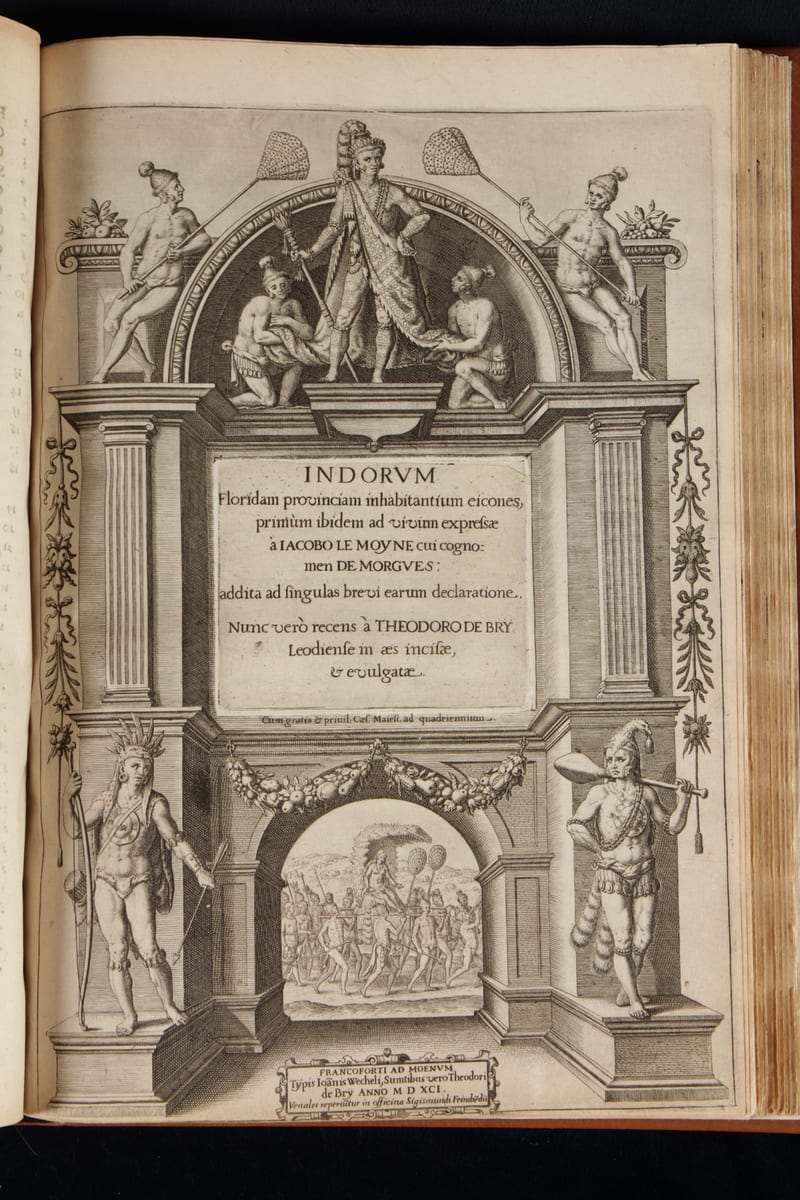
Grands Voyages & Petits Voyages, The Complete De Bry
Theodor de Bry (1528–1598) and sons Johann Theodor & Johann Israel de Bry · Frankfurt · 1590–1634
Price on request
Voyages & Discovery · FM-0026
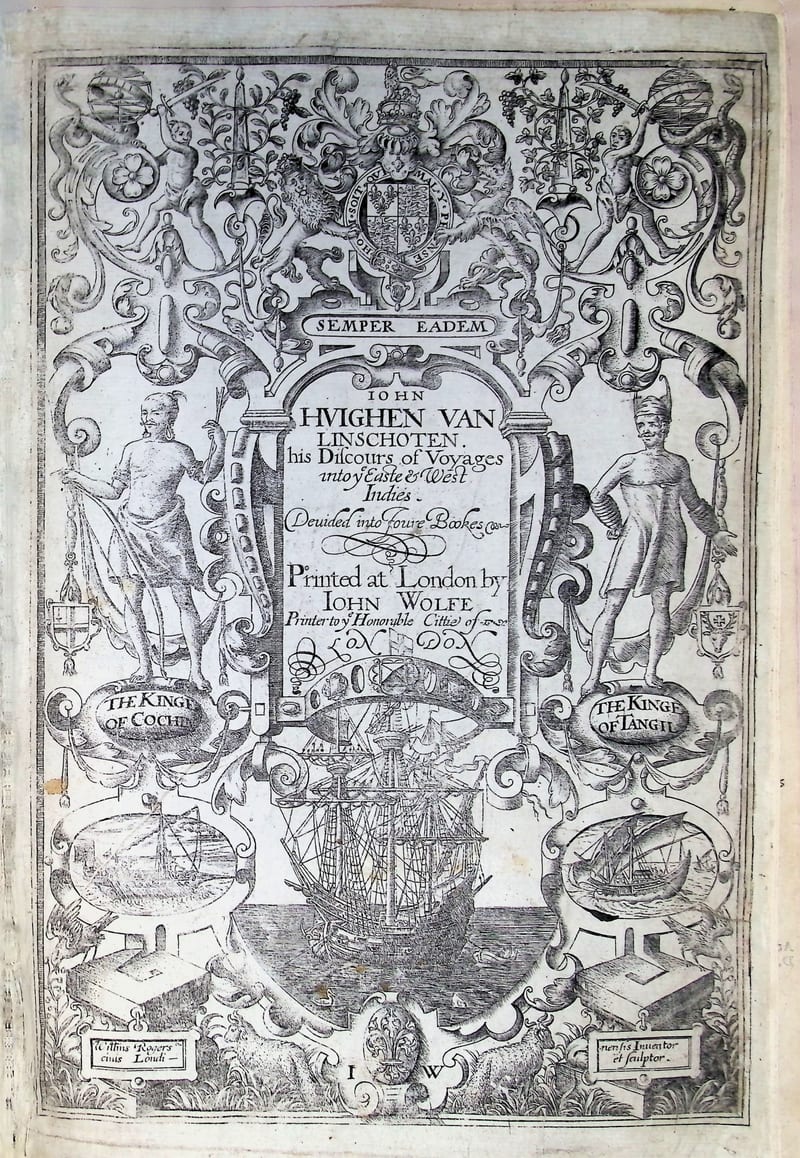
John Huighen van Linschoten his Discours of Voyages into ye Easte & West Indies
Jan Huygen van Linschoten (translated by William Phillip) · London · 1598
Price on request
Voyages & Discovery · FM-0044
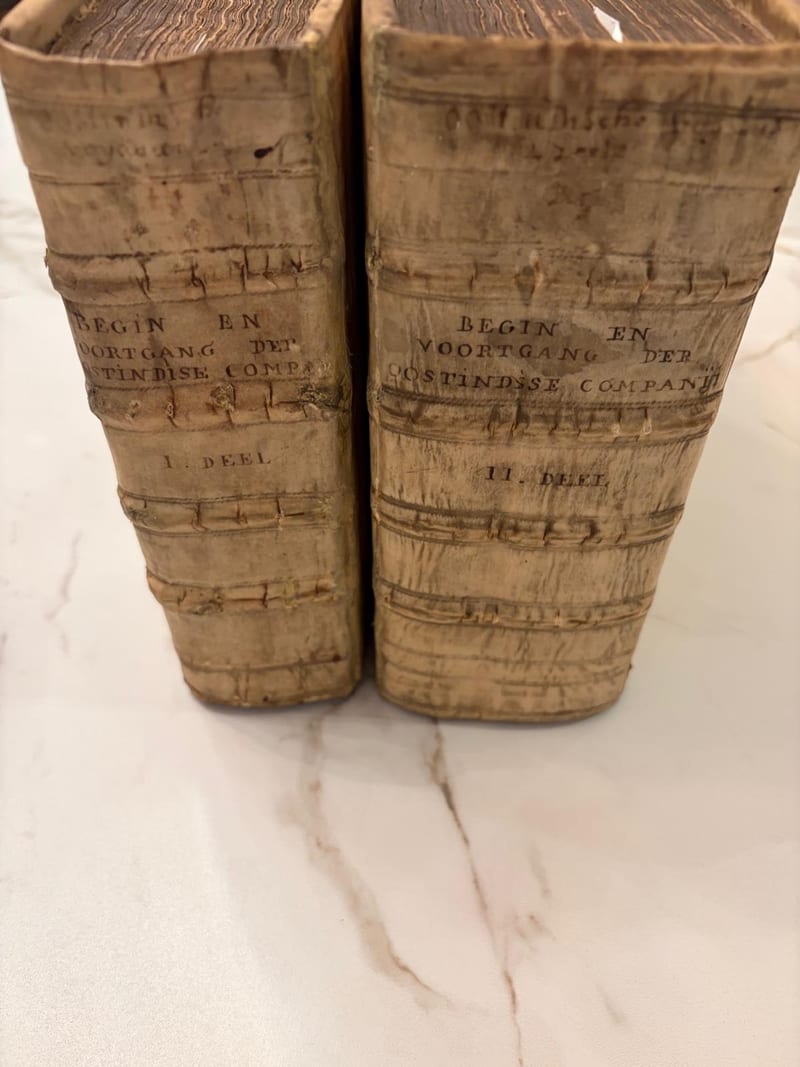
Begin ende Voortgangh van de Vereenighde Nederlantsche Geoctroyeerde Oost-Indische Compagnie
Isaac Commelin (compiler and editor) · Amsterdam · 1646
Price on request
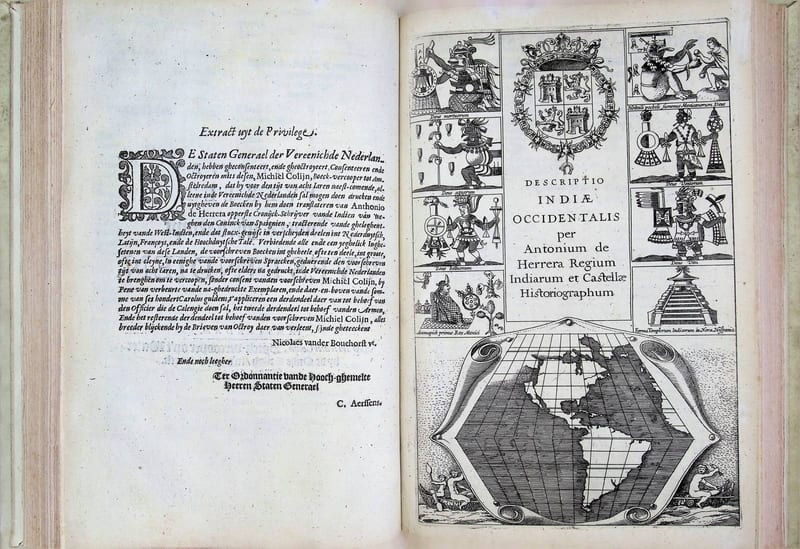
Voyages & Discovery · FM-0033
Spieghel der Australische navigatie
Jacob le Maire; Antonio de Herrera; Pedro Ordóñez de Ceballos · Amsterdam · 1621–1622
€ 35.000
All 26 works: The Dutch East India Company (VOC) →