Voyages & Discovery
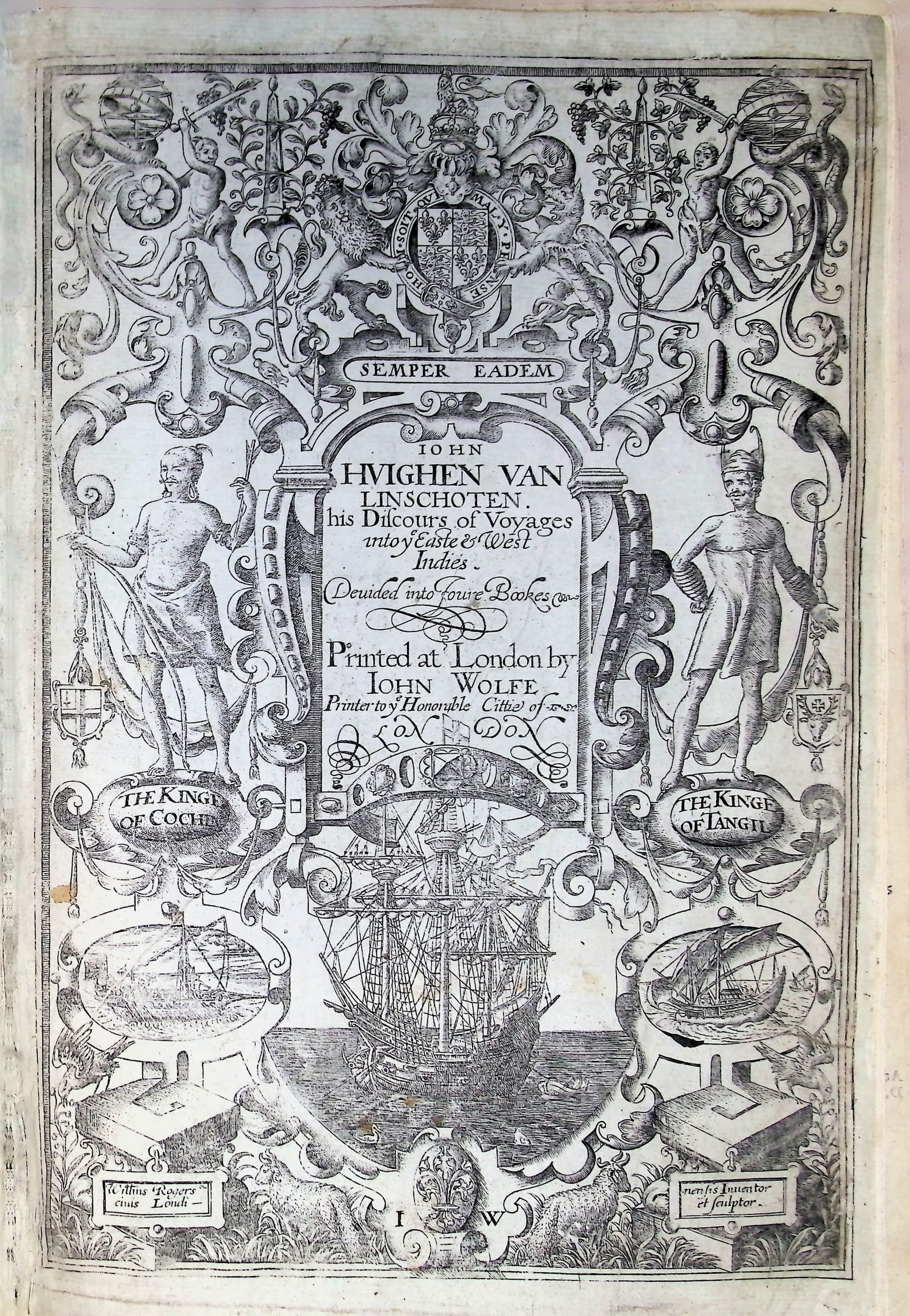
John Huighen van Linschoten his Discours of Voyages into ye Easte & West Indies
Jan Huygen van Linschoten (translated by William Phillip) · London · John Wolfe · 1598
The first English edition of the Itinerario, the London translation that carried Van Linschoten's secrets to England.
FM-0026
Price on request
Key Properties
Edition: First and only English edition (after the Dutch Itinerario of 1596)
Translator: William Phillip, at the suggestion of Richard Hakluyt
Language: English; text in two columns
Format: Small folio
Binding: Later red morocco (c. 1950), blind-tooled and gilt; spine compartmented and gilt, lettered direct
Illustration: Engraved title-page and three further engraved title-pages; nine engraved folding maps; three folding views; four woodcut maps in the text
Collation & Technical Description
8 unnumbered leaves (3 blank, one blank carrying a manuscript table of contents); one engraved title-page (verso blank); 4 leaves of dedications. First Book: 197 pp. (final unnumbered page blank). Second Book: pp. 198–295 (final unnumbered page blank). Third Book: pp. 307–447 (final unnumbered page blank). Fourth Book: 1 unnumbered leaf, pp. 452–462.
Condition
A mint copy. The bookblock perfect; text printed on strong paper, without repairs. The maps on strong, thick paper, except the South-East Asia map and the united Pigafetta map of Africa, which are on thin paper; the world map cut a little short (less than in the Church copy), and all maps short in the margins, as always. The 'clover-leaf' map a perfect impression. Handsomely bound in the mid-twentieth century.
References & Bibliography
Church 321. STC 15691. Sabin 41374. Alden & Landis 598/57. Hill 1025. Borba de Moraes I, 417. Maggs, no. 678/343 (1939). Complete copies are of the greatest rarity on the market.
Description
The first and only English edition of Van Linschoten's celebrated description of the East and West Indies, first published in Dutch as the Itinerario in 1596. As a young man Van Linschoten sailed to the Indies in the service of the Fugger house and became secretary to Vincente da Fonseca, Archbishop of Goa and of all India, an ideal vantage point from which to question the Portuguese pilots who, returning from the Far East and the Spice Islands to Lisbon, were obliged to report first at Goa. Back in Holland in 1592 he compiled a handbook of the Indies drawn from this exclusive Portuguese knowledge and from the Spanish and Portuguese books published to date.
The work is in four parts. The first, the Itinerario proper, describes the route to the Indies, living conditions, the merchandise to be had and the peoples encountered. The second describes Africa and the Americas (pp. 216–295). The third is a ruteiro or rutter, a pilot's guide for sailing into the Indies, and the fourth treats the revenues and costs of the Kings of Spain and Portugal in their Eastern and Western possessions. Complete copies retaining the original English engravings of all the maps are very scarce; the book was used so heavily by navigators that the maps are often missing or supplied from Dutch or French editions.
The nine engraved folding maps are: a world map after Ortelius, re-engraved by Wolfe (very rare, not in Van den Broecke); Mozambique, after Linschoten but smaller; the Arabian Sea; East Africa, after the Van Langren map of the Dutch edition, re-engraved; South-East Asia, after Linschoten; West Africa, with an inset of St Helena; South America, after Linschoten; Africa after Pigafetta, on two sheets united (very rare); and the celebrated 'clover-leaf' map of Indonesia and the Moluccas after Plancius, with insets of the various spices, one of the most sought-after maps of Asia. All carry English text. Four further woodcut maps appear in the text: Madagascar (Insula S. Laurentii), Sumatra, Java Major and St Helena.
Historical Significance
The English Linschoten was translated by William Phillip at the suggestion of Richard Hakluyt, and carried to England the navigational knowledge the Portuguese had guarded for a century. 'This inestimable book, a treasure of all knowledge and learning relating to the East and West Indies and the navigation thither … has been in the highest esteem for nearly a century, and was given to each and every ship sailing to the Indies as a log-book' (Frederik Muller, Books, Maps & Plates on America and a Remarkable Collection of Early Voyages, Amsterdam, 1872). English captains were still quoting the book in their logs as late as the eighteenth century.
Provenance
Available on request.
Related works
Voyages & Discovery · FM-0022
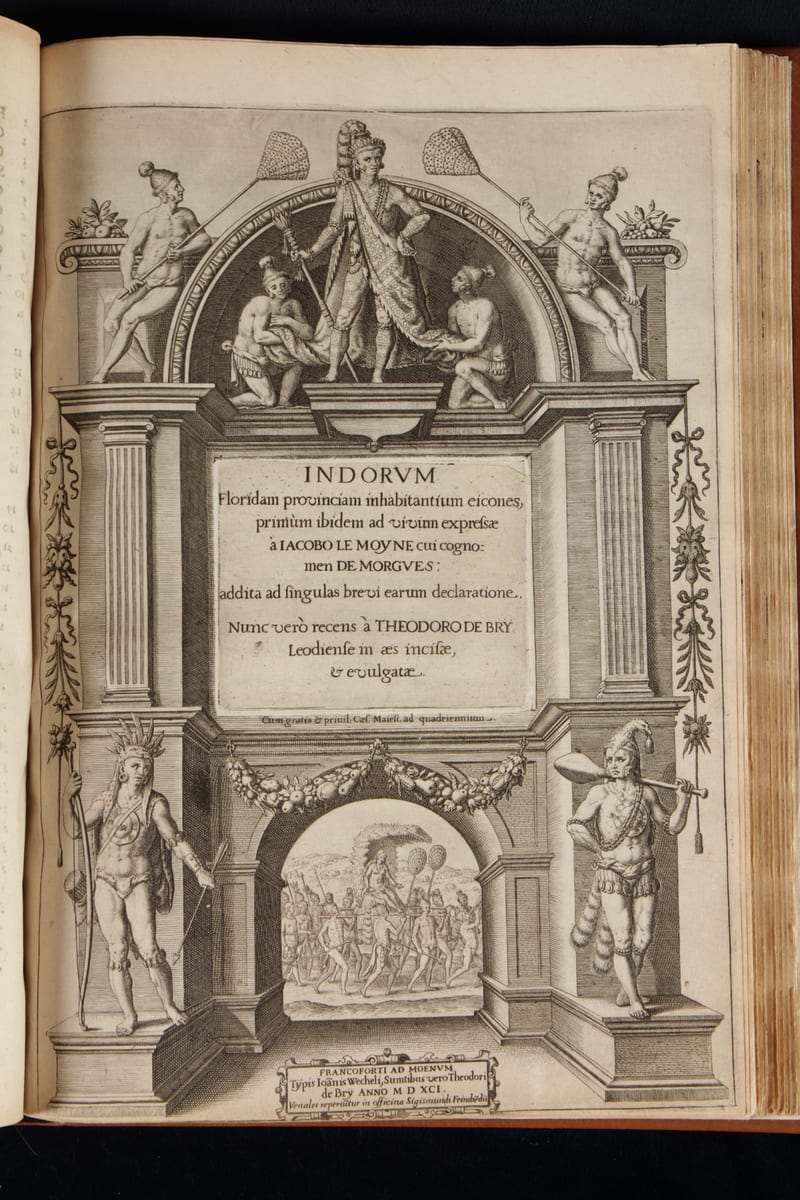
Grands Voyages & Petits Voyages, The Complete De Bry
Theodor de Bry (1528–1598) and sons Johann Theodor & Johann Israel de Bry · Frankfurt · 1590–1634
Price on request
Voyages & Discovery · FM-0044
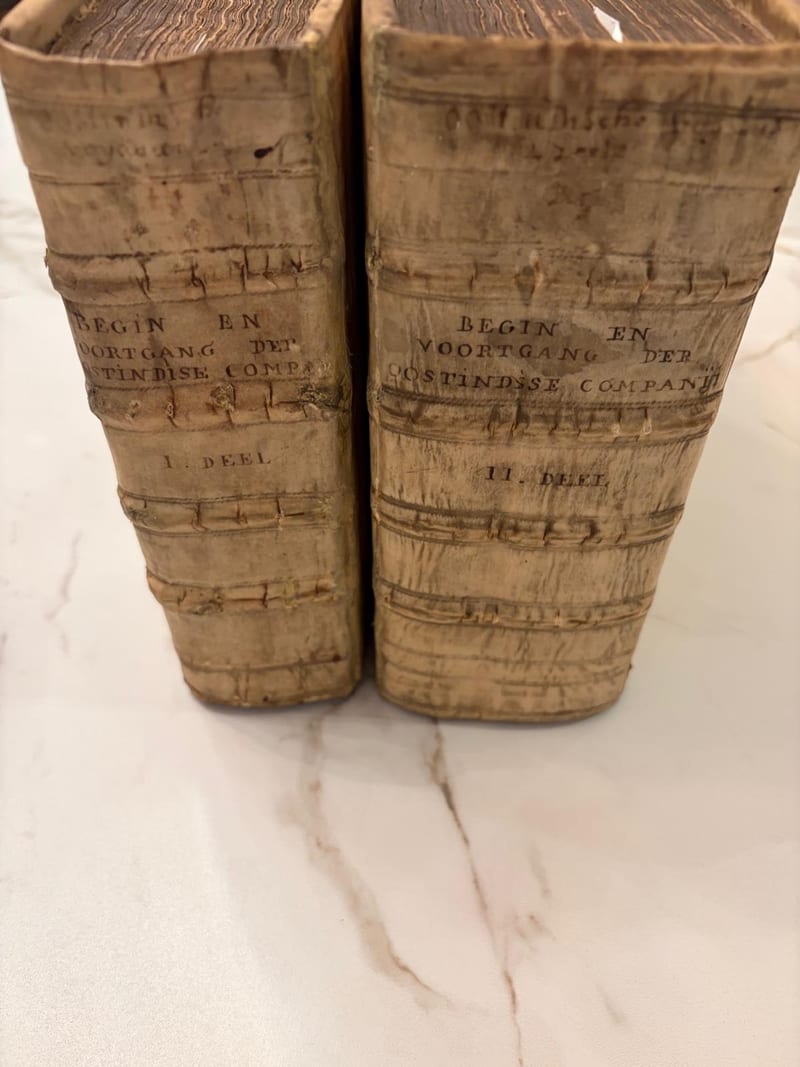
Begin ende Voortgangh van de Vereenighde Nederlantsche Geoctroyeerde Oost-Indische Compagnie
Isaac Commelin (compiler and editor) · Amsterdam · 1646
Price on request
Voyages & Discovery · FM-0030
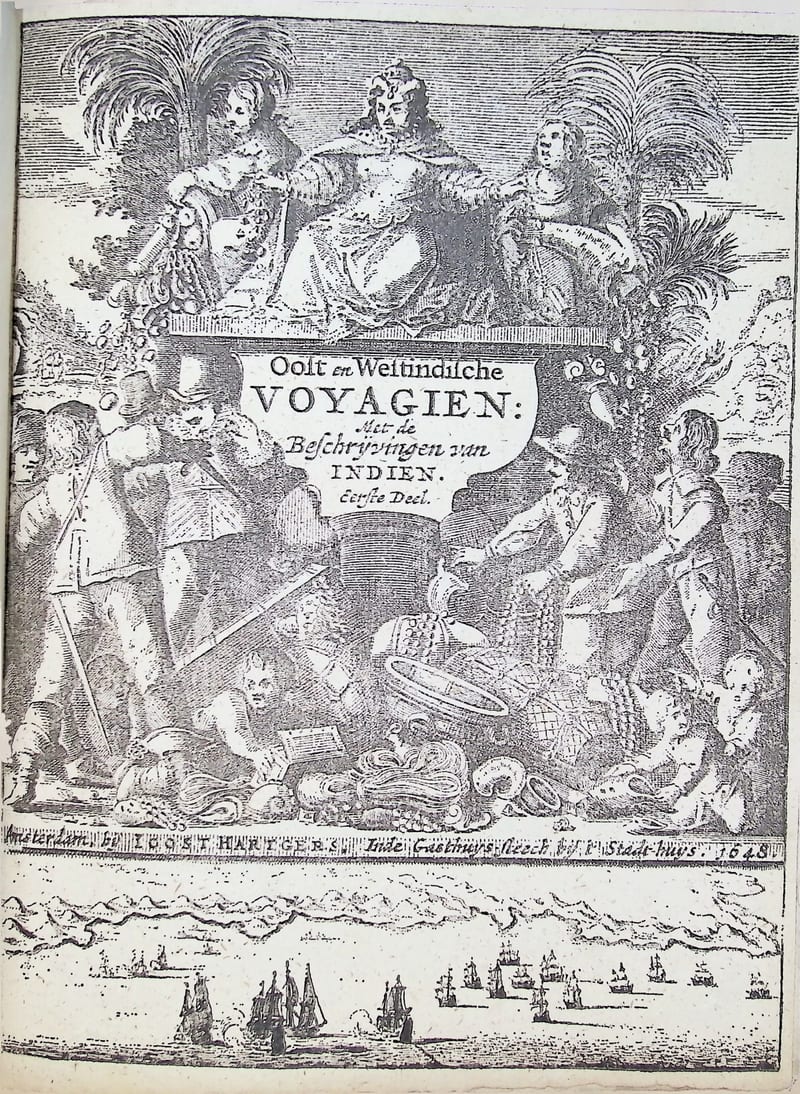
Oost-Indische voyagien
Joost Hartgers (collector & printer); various authors · Amsterdam · 1648
Price on request
Voyages & Discovery · FM-0033
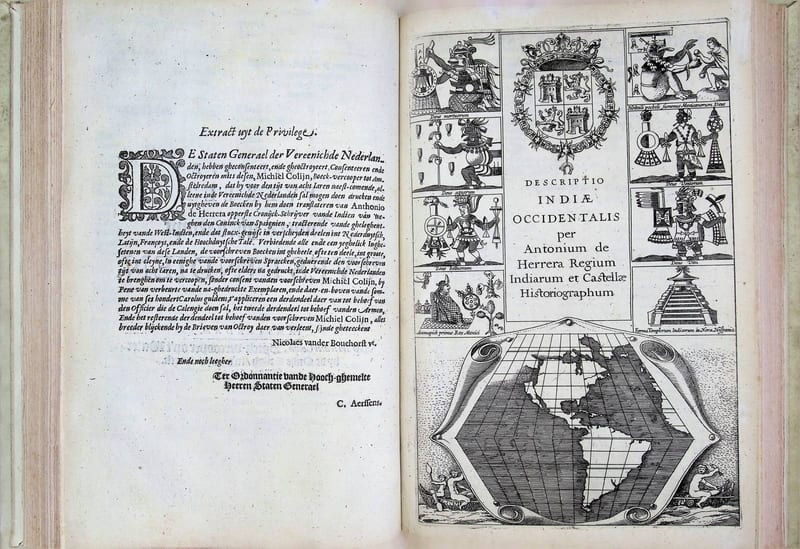
Spieghel der Australische navigatie
Jacob le Maire; Antonio de Herrera; Pedro Ordóñez de Ceballos · Amsterdam · 1621–1622
€ 35.000
All 1 work: Jan Huygen van Linschoten → · Jan Huygen van Linschoten · The Dutch East India Company (VOC)