Voyages & Discovery
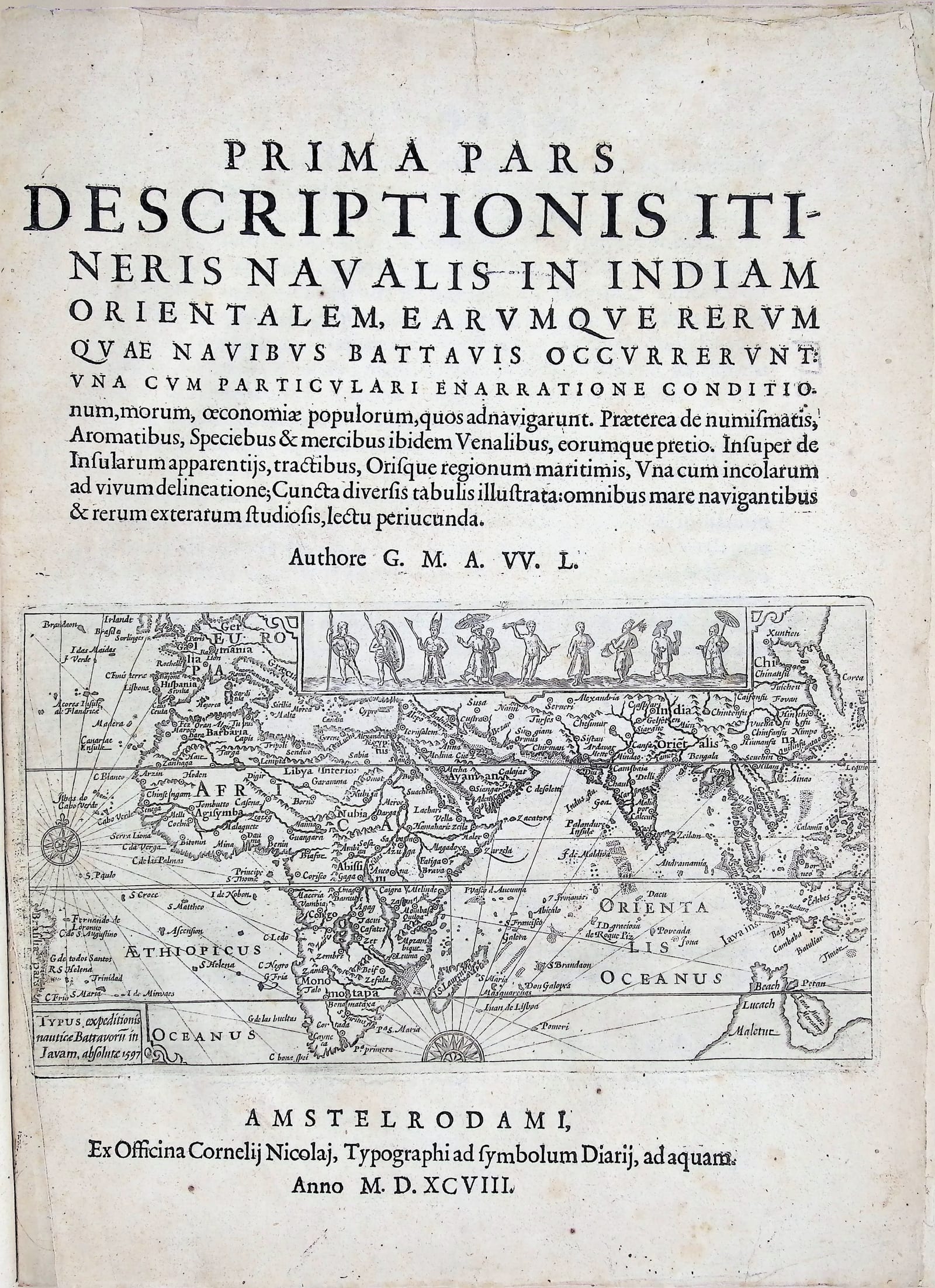
Prima pars descriptionis itineris navalis in Indiam Orientalem
Willem Lodewijcksz · Amsterdam · Cornelis Claesz (Cornelis Nicolai) · 1598
Willem Lodewijcksz, the first Latin edition of the first Dutch voyage to the East Indies (the Houtman voyage)
FM-0032
€ 25.000
Key Properties
Edition: First Latin edition
Language: Latin
Format: Folio
Binding: See condition / available on request
Collation & Technical Description
Illustrated with engraved maps and plates; the Lodewijcksz journal far outshone the earlier Langenes editions in composition, size and number of illustrations. The work sometimes appears together with De Veer's account of the Barentsz Arctic voyages, also published by Claesz.
Condition
Large quarto. English eighteenth-century polished calf, rebacked in the twentieth century with matching calf; modern red morocco title label in the second spine compartment. 48 in-text etched and engraved plates (including the title-page reduction of the Claesz–Houtman route map), plus one engraved plate on the final leaf (i.e. without the folding engraving of the bazaar at Bantam, lacking in essentially all copies), and woodcut charts and diagrams in the text. A4–N4; some leaves with deckled edges, a few plates very slightly shaved at the outer edge; eighteenth-century marbled endpapers; very minor dampstain to the edges of [A4].
References & Bibliography
European Americana 598/60; JCB (3) I:364; Penrose, Travel and Discovery in the Renaissance (1952), p. 204; Schilder, MCN VII, p. 258; Tiele (1867), p. 127, no. 112.
Description
The first Latin edition of the famed journal of Willem Lodewijcksz, who sailed with Cornelis de Houtman and Pieter Dirckz Keyser, the definitive contemporary account of the first successful Dutch voyage to the East Indies.
The Houtman voyage of 1595–97 was the first successful Dutch attempt to circumvent the Iberian monopoly on the spice trade. Four vessels (Mauritius, Amsterdam, Hollandia and Duifje) left Amsterdam on 2 April 1595, funded by nine merchants of the newly founded Compagnie van Verre. Following Van Linschoten's instructions the fleet avoided the Malacca Strait for the more southern Sunda Strait, reaching Banten and trading as far as Bali; of the original 249 crew, only 87 returned alive. Despite its hardships the voyage proved the Dutch could reach the East Indies, and within five years 65 Dutch ships had sailed there; shortly afterwards the VOC was formed.
Cornelis Claesz secured Lodewijcksz's journal, the most complete report of the voyage, and published D'Eerste Boeck. Histoire van Indien (Amsterdam, 1598); the Latin and French translations of the same year were highly sought after abroad.
Historical Significance
One of the most important voyages in the history of global commerce, and its definitive account. By breaking the Iberian monopoly it opened the way to the foundation of the VOC and Dutch dominance of the spice trade.
Provenance
Augustus Keppel, 1st Viscount Keppel (or a family member), with the engraved bookplate of Eden Hall and the Keppel arms (“NE CEDE MALIS”); Antiquariaat A. L. van Gendt & Co., Amsterdam, 1972; private collection, USA.
Related works
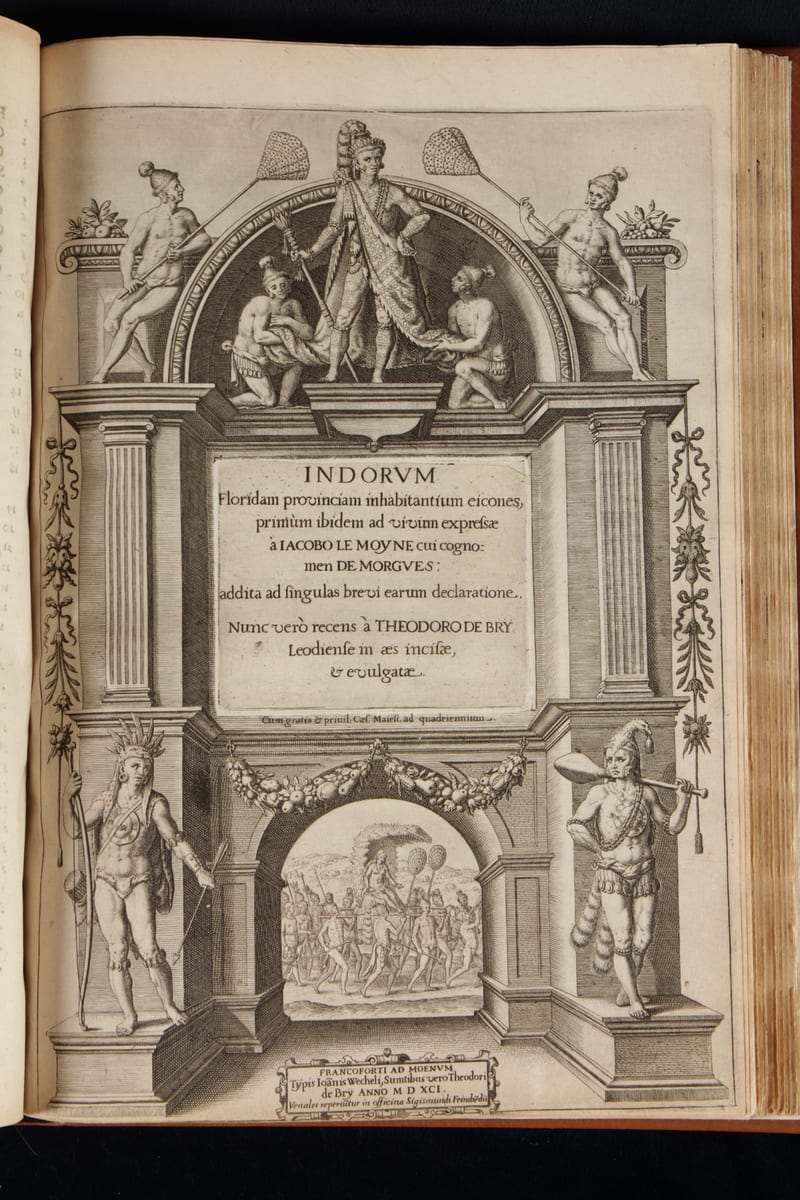
Voyages & Discovery · FM-0022
Grands Voyages & Petits Voyages, The Complete De Bry
Theodor de Bry (1528–1598) and sons Johann Theodor & Johann Israel de Bry · Frankfurt · 1590–1634
Price on request
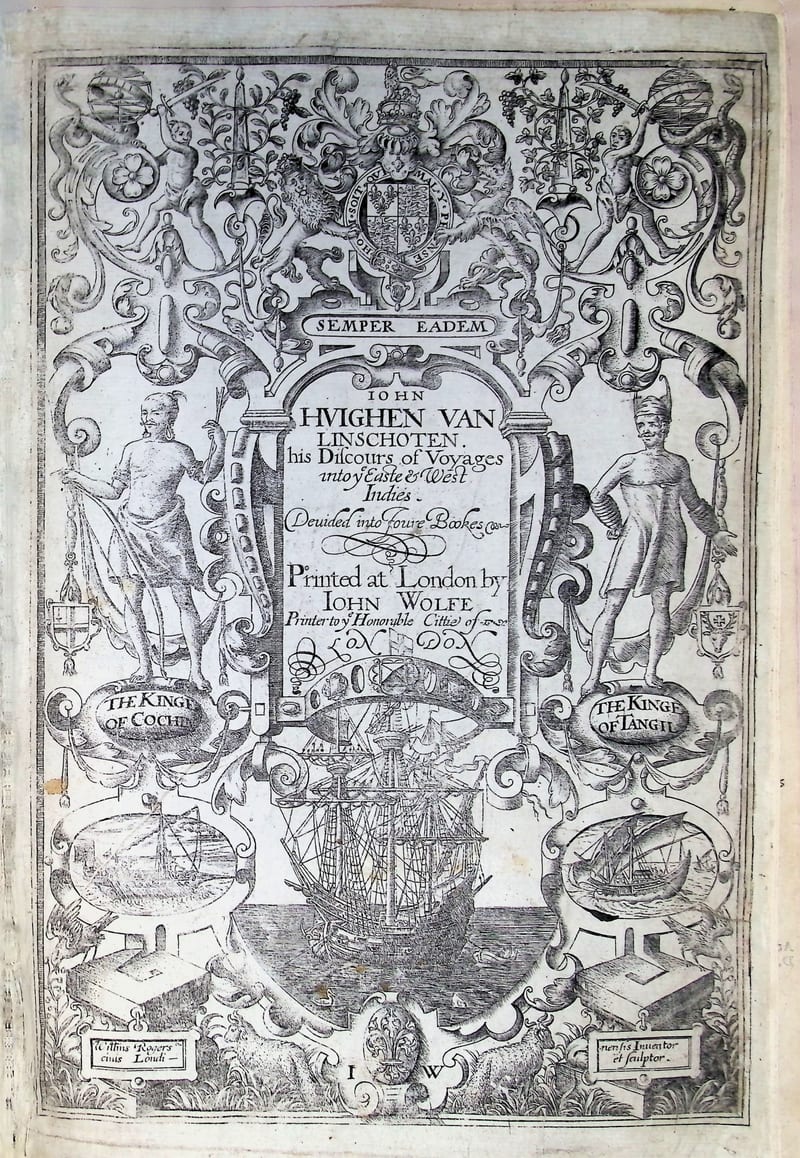
Voyages & Discovery · FM-0026
John Huighen van Linschoten his Discours of Voyages into ye Easte & West Indies
Jan Huygen van Linschoten (translated by William Phillip) · London · 1598
Price on request
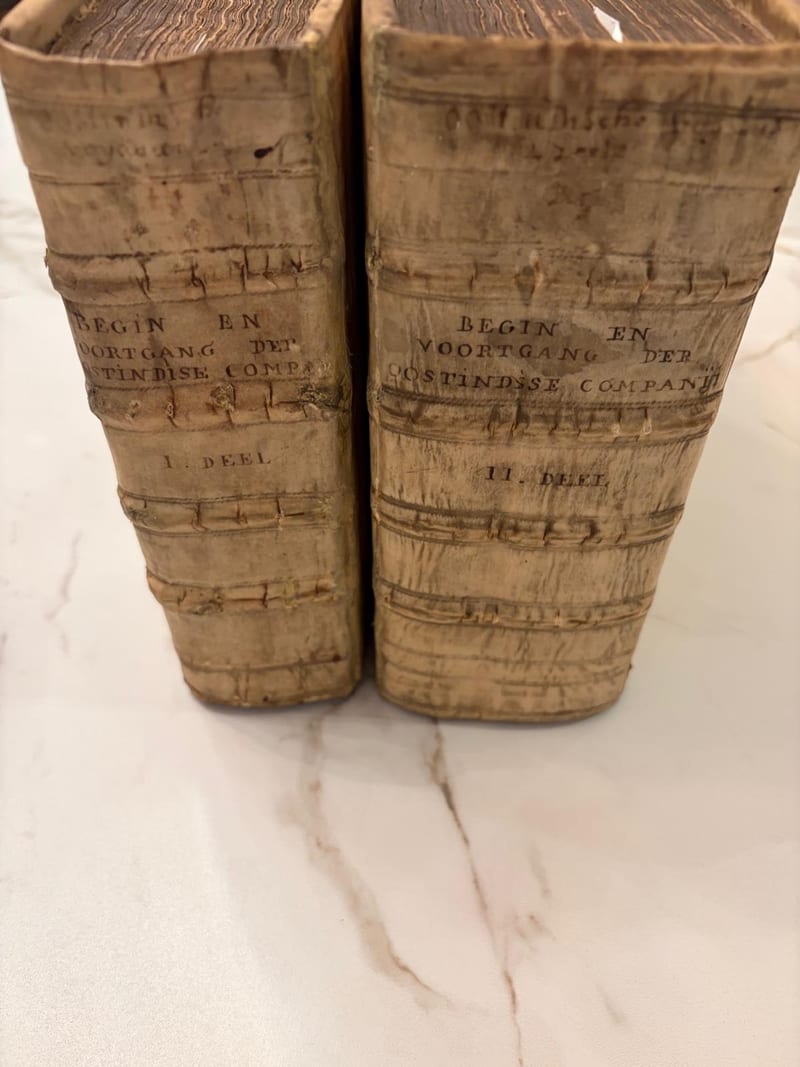
Voyages & Discovery · FM-0044
Begin ende Voortgangh van de Vereenighde Nederlantsche Geoctroyeerde Oost-Indische Compagnie
Isaac Commelin (compiler and editor) · Amsterdam · 1646
Price on request
Voyages & Discovery · FM-0030
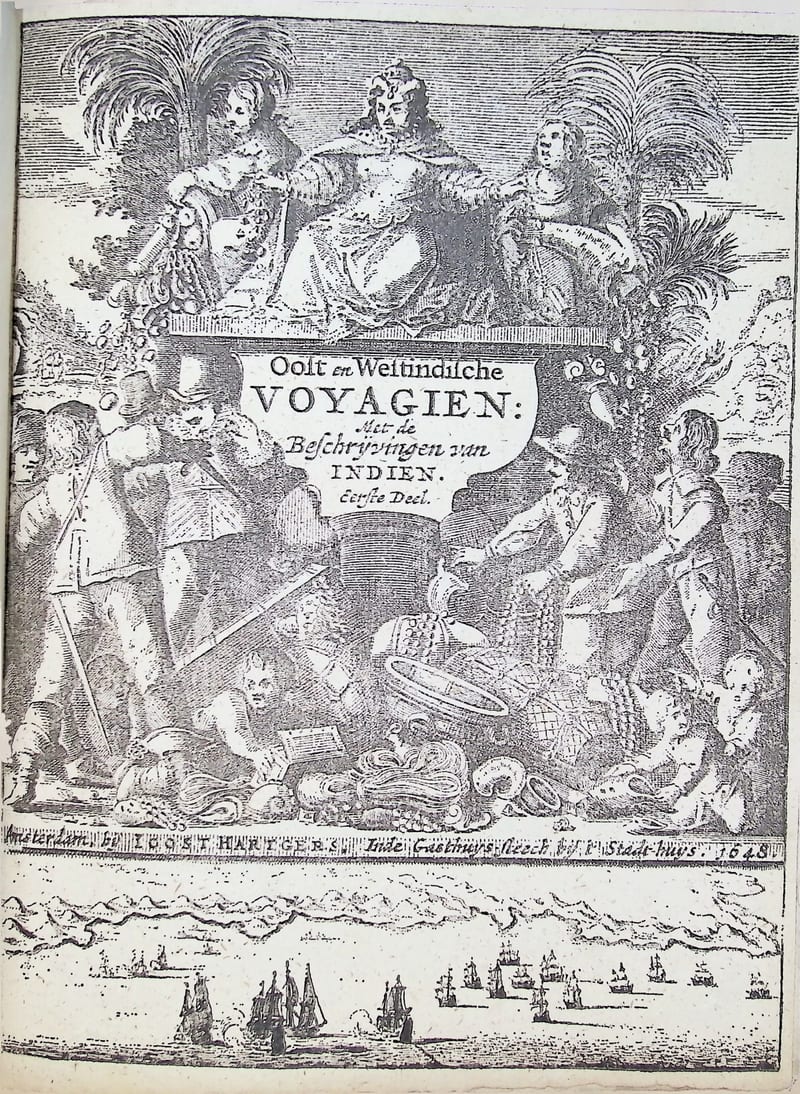
Oost-Indische voyagien
Joost Hartgers (collector & printer); various authors · Amsterdam · 1648
Price on request
All 26 works: The Dutch East India Company (VOC) →