Voyages & Discovery
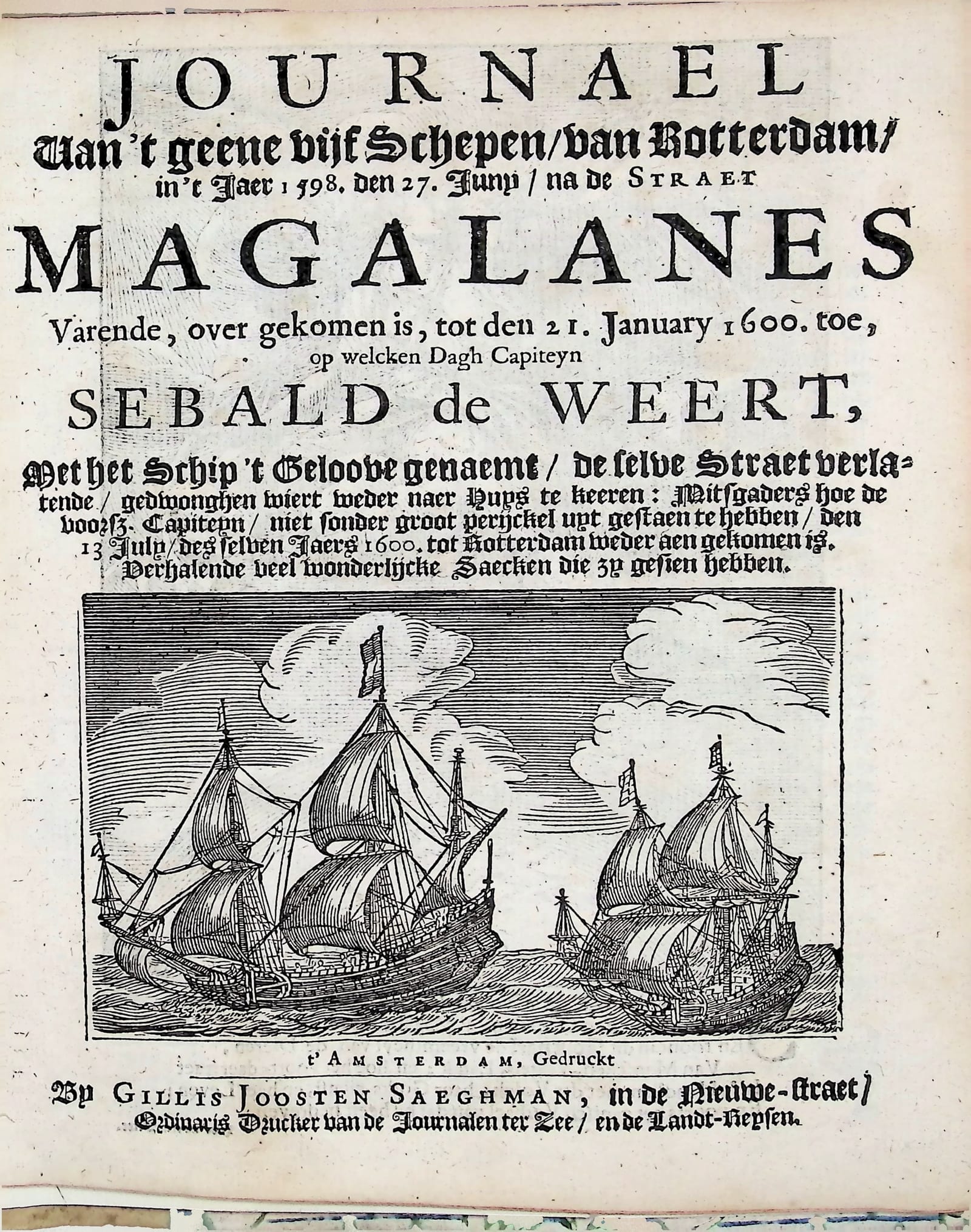
Journael van 't geene vijf Schepen van Rotterdam in 't Jaer 1598 … na de Straet Magalanes varende … Capiteyn Sebald de Weert
Sebald de Weert · Amsterdam · Gillis Joosten Saeghman · 1663
Saeghman's popular edition (Amsterdam, Gillis Joosten Saeghman, 1663) of Sebald de Weert's journal of the disastrous 1598 voyage of the five Rotterdam ships through the Strait of Magellan. Collated and complete, with woodcut illustrations; part 8 of Saeghman's "Verscheyde Oost-Indische Voyagien".
FM-0060
€ 3.500
Key Properties
First Saeghman edition. Part 8 of the first volume of Saeghman's collection of voyages "Verscheyde Oost-Indische Voyagien" (each part issued separately).
Collation & Technical Description
Small quarto. Collated and complete. Woodcut vignette on the title, allegorical woodcut on the verso, and 4 further woodcut or engraved illustrations in the text.
Condition
Bound in paper-patterned boards with a quarter vellum spine. Internally clean and unmarked.
References & Bibliography
Sabin 102500; Tiele, Mémoire bibliographique sur les journaux des navigateurs néerlandais, pp. 24–26.
Description
Saeghman's popular edition of the journal of Sebald de Weert, recounting the calamitous voyage of the five ships fitted out at Rotterdam in 1598 by the Magellanic Company (Magelhaensche Compagnie), one of the earliest Dutch attempts to reach the East Indies and the Pacific by way of the Strait of Magellan, both to open the spice trade and to carry the war against Spain into her own American and Pacific waters. It was, in effect, the expedition of Jacques Mahu and Simon de Cordes, with de Weert one of the captains.
It marks a key turning point in the history of Dutch seafaring. Mounted at the very end of the sixteenth century, while the Dutch Republic was still locked in its long war of independence against Spain, the voyage is the moment the Dutch ceased to be merely regional traders and set out to challenge the Iberian monopoly across the whole globe. It belongs to the first generation of pre-VOC "voorcompagnie" expeditions whose triumphs and disasters led directly to the founding of the Dutch East India Company in 1602.
The voyage itself was a catastrophe for its commanders. Admiral Jacques Mahu died of fever off Cape Verde in September 1598; his successor Simon de Cordes was killed in November 1599, cut down with some twenty-seven of his men by the Mapuche on Mocha Island off Chile. The fleet was scattered by storms. Yet from that disaster came two events of lasting consequence. One ship, the Liefde, drifted across the Pacific and reached Japan in 1600 with the Englishman William Adams aboard, the first Dutch ship to do so, and the beginning of a Dutch presence in Japan that would endure, uniquely among Europeans, for the next two and a half centuries. And de Weert's own ships, separated in a storm and forced to winter four months in the Strait of Magellan amid terrible hardship, sighted on the way home the islands that still bear his name, the Sebald (Sebaldine) Islands off the Falklands.
The voyage also laid bare how treacherous the Magellan passage was, a lesson that would soon drive the Dutch to seek an alternative, and so to the discovery of Cape Horn by Schouten and Le Maire in 1616. This is the first Saeghman edition (Amsterdam, Gillis Joosten Saeghman, 1663), forming part 8 of the first volume of his celebrated collection of voyages, "Verscheyde Oost-Indische Voyagien", each part published separately. Collated and complete, with a woodcut vignette on the title, an allegorical woodcut on the verso, and four further woodcut or engraved illustrations in the text.
Historical Significance
Records one of the first Dutch attempts to reach the East Indies by way of the Strait of Magellan, the Magellanic Company's fleet of 1598, the same expedition whose sole surviving ship, the Liefde, carried William Adams to Japan. De Weert's journal is also the source for the sighting of the Sebald Islands (now the Jason Islands, near the Falklands).
Related works
Voyages & Discovery · FM-0022
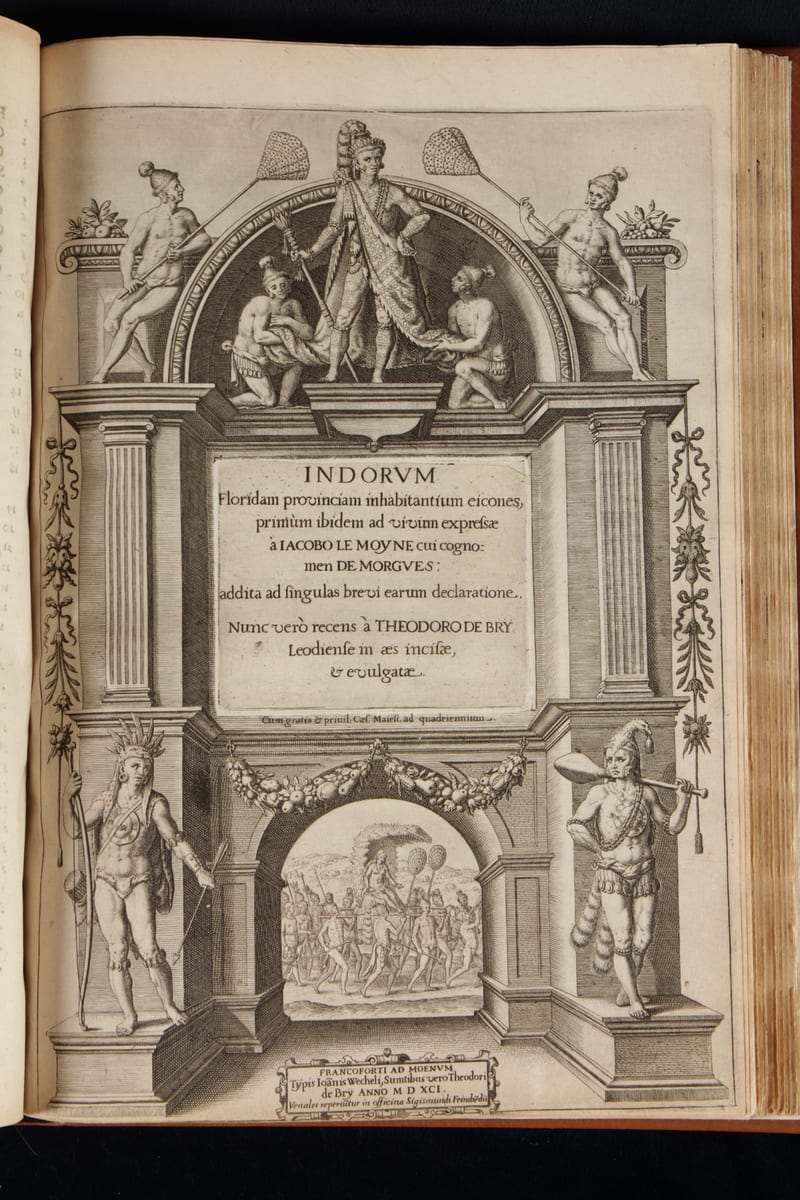
Grands Voyages & Petits Voyages, The Complete De Bry
Theodor de Bry (1528–1598) and sons Johann Theodor & Johann Israel de Bry · Frankfurt · 1590–1634
Price on request
Voyages & Discovery · FM-0026
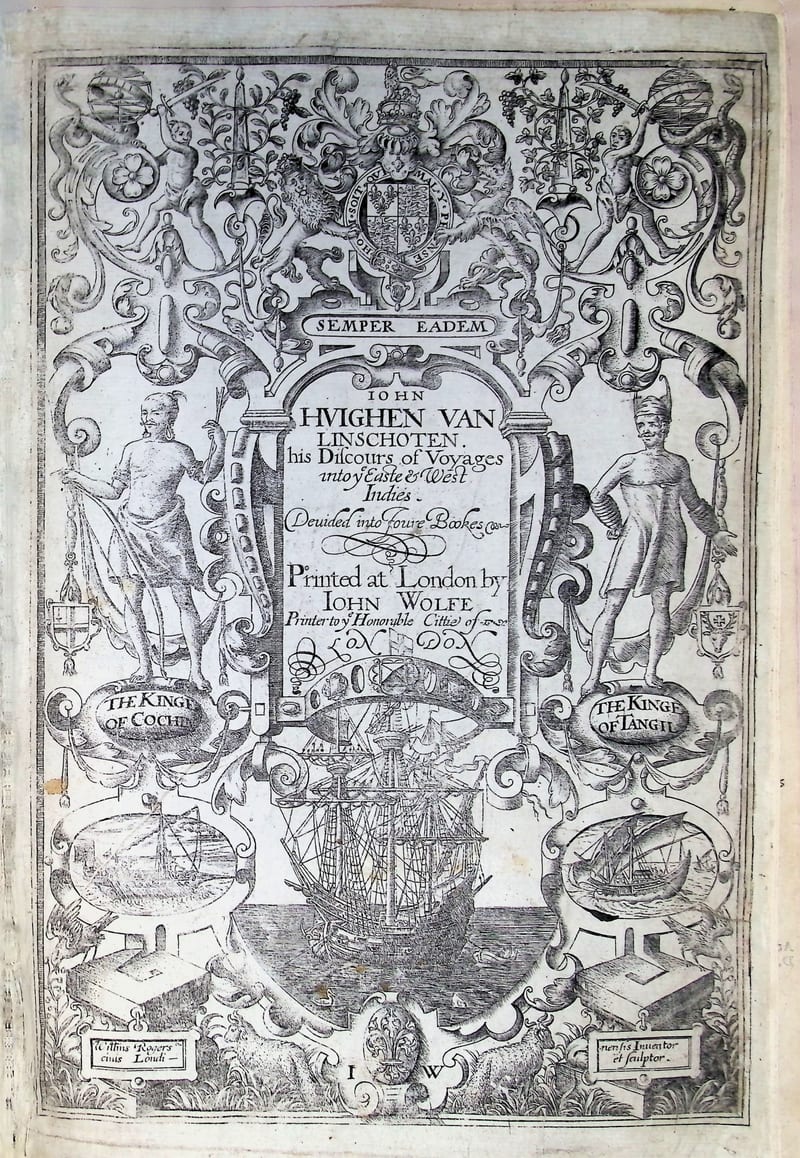
John Huighen van Linschoten his Discours of Voyages into ye Easte & West Indies
Jan Huygen van Linschoten (translated by William Phillip) · London · 1598
Price on request
Voyages & Discovery · FM-0044
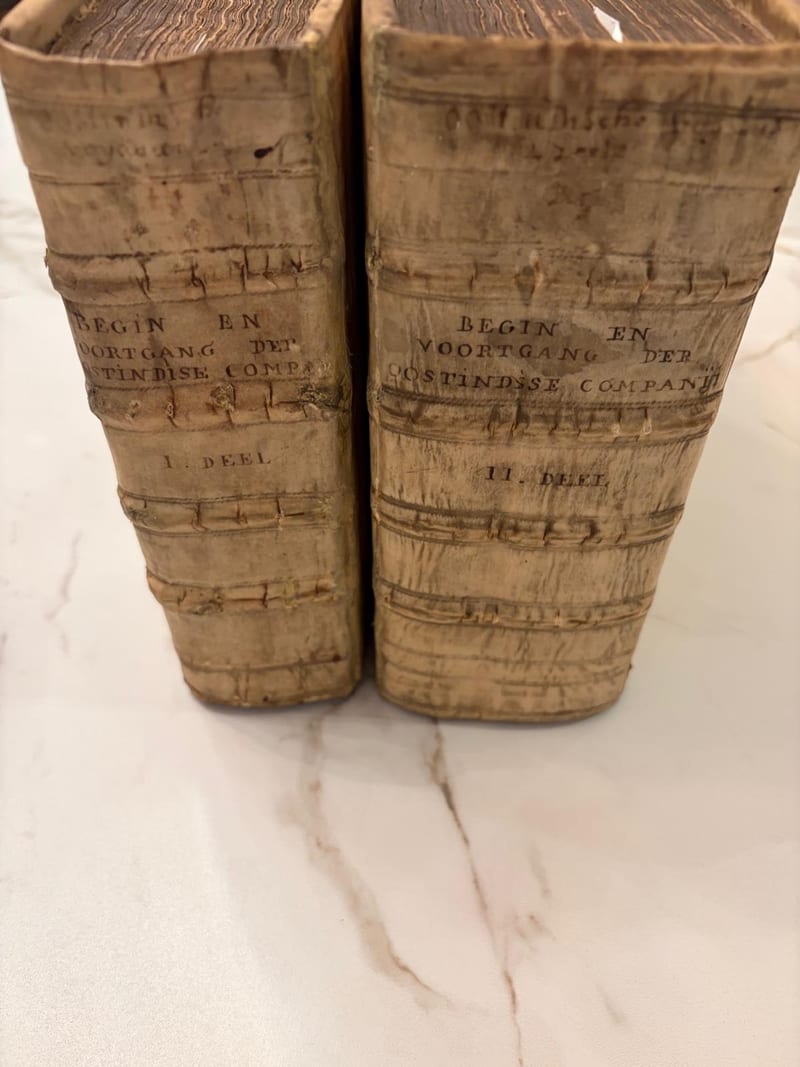
Begin ende Voortgangh van de Vereenighde Nederlantsche Geoctroyeerde Oost-Indische Compagnie
Isaac Commelin (compiler and editor) · Amsterdam · 1646
Price on request
Voyages & Discovery · FM-0030
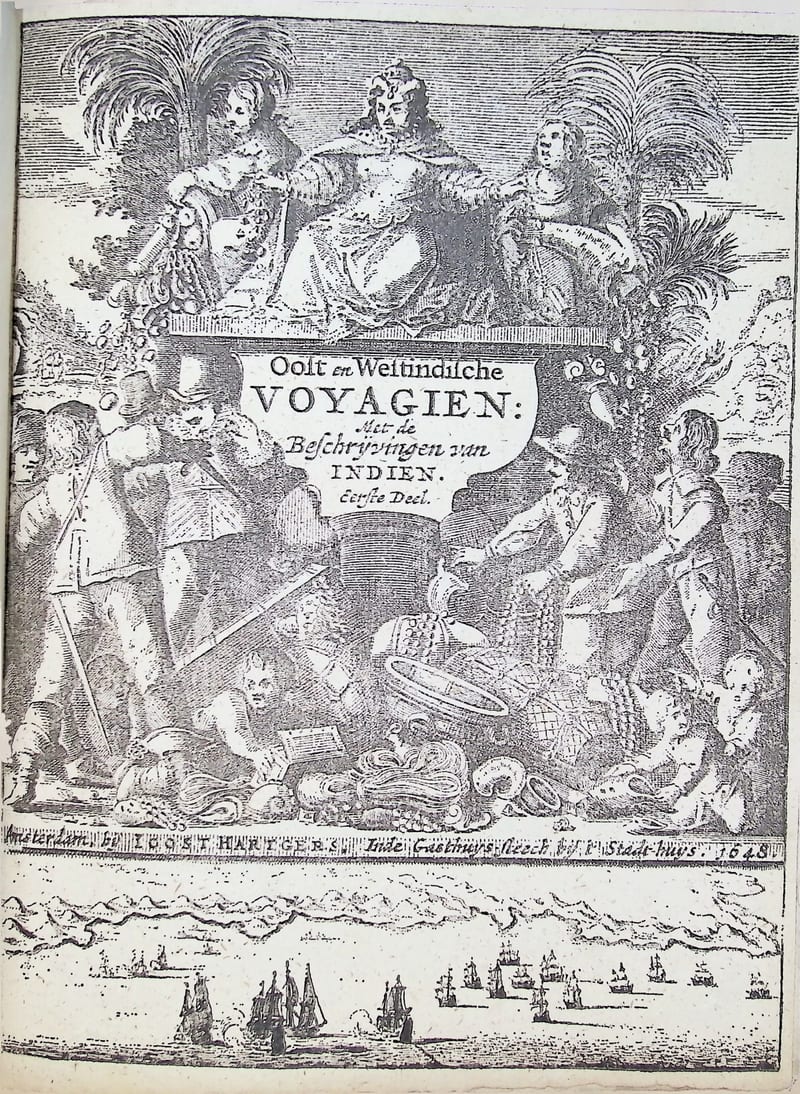
Oost-Indische voyagien
Joost Hartgers (collector & printer); various authors · Amsterdam · 1648
Price on request
All 26 works: The Dutch East India Company (VOC) → · The Dutch East India Company (VOC) · The Strait of Magellan and Cape Horn